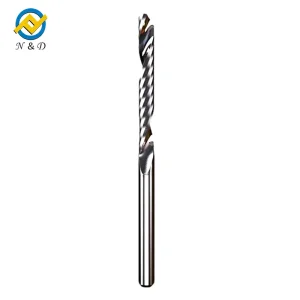
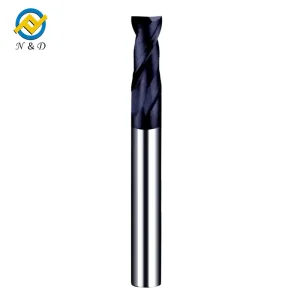
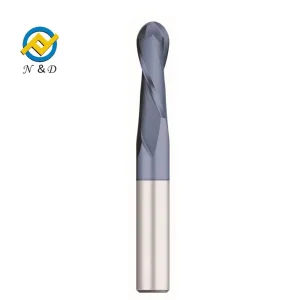
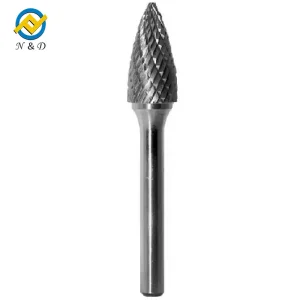
High-grade CNC rotary tooling designed to optimize production efficiency, reduce down-time, and withstand localized heavy-duty processing of steels, alloys, and dense woods.
The economy of the Republic of Benin is experiencing a structural pivot. Spearheaded by the development of the Glo-Djigbé Industrial Zone (GDIZ) and the continuous modernization of the Autonomous Port of Cotonou, industrial demand is shifting from basic assembly towards advanced manufacturing, metal fabrication, and localized heavy processing.
These emerging industrial installations rely heavily on the resilience of their cutting tools. Machining in Benin faces specific localized challenges:
"As Benin moves aggressively to localize its processing industries, the transition from legacy High-Speed Steel (HSS) to Solid Carbide milling technologies is not just an upgrade; it is a fundamental driver of cost efficiency and global competitiveness."

Solid Carbide is not a uniform material; it is a complex composite of Tungsten Carbide (WC) grains bound by a Cobalt (Co) metal matrix. The performance of an end mill in difficult industrial environments depends entirely on the metallurgical formulation and geometry optimization.
We utilize ultra-fine and submicron tungsten carbide grain sizes (0.4μm - 0.6μm). A smaller grain size provides more boundary interfaces, dramatically improving hardness (up to 92.5 HRA) and wear resistance.
For operations in Benin, we coat our tooling with AlTiN (Aluminum Titanium Nitride) or nACo (Nano-Composite) layers. These coatings form an aluminum-oxide barrier at high temperatures, shielding the carbide core from extreme heat (up to 900°C) and corrosive humidity.
Variable helix angles (e.g., 35°/38°) disrupt the harmonic resonance that causes chatter. This variable pitch reduces vibration, resulting in smoother surface finishes and longer spindle life on light CNC routers.
| Substrate Material Class | Grain Size (μm) | Cobalt Content (Co %) | Hardness (HRA) | Transverse Rupture Strength (TRS) | Primary Local Application in Benin |
|---|---|---|---|---|---|
| K44UF Ultra-Fine | 0.4 - 0.5 | 12% | 92.5 | 4300 MPa | Stainless steel profiling, aerospace parts, die/mould machining in GDIZ. |
| YL10.2 Submicron | 0.6 | 10% | 91.8 | 4000 MPa | General steel fabrication, agricultural machinery casting, carbon steel slotting. |
| YG8 Coarse Grain | 1.2 - 1.5 | 8% | 89.5 | 2800 MPa | Woodworking routers, aluminum extrusions, non-ferrous soft castings. |
Since our founding in 2004, we have established our reputation as a trusted manufacturing partner for industrial projects globally. Our production hub in Guanghan, Sichuan Province, China, integrates raw material blending, high-pressure sintering, and precision grinding to serve the West African industrial sector.
We provide tailormade engineering services. If your project in Benin requires custom dimensions, specific neck relief profiles, or specialized coatings for high-abrasion applications, our engineering team can produce matching tooling configurations from CAD files or sample geometries.
Request Custom Tooling QuoteWe work directly with major logistics networks to ensure smooth customs handling. Shipping to Benin is routed through the Autonomous Port of Cotonou or Cotonou Cadjehoun Airport (COO) for urgent orders. Standard delivery routes utilize direct ocean freight from Shanghai, Ningbo, or Shenzhen ports directly to West Africa, with customs documents prepared to minimize delay.
We ensure traceabilty from powder metallurgy to final laser inspection. Here is how we build durability into every solid carbide tool:
Tungsten carbide powder, cobalt binders, and additive micro-elements are mixed in alcohol mediums, ball-milled to achieve a uniform grain size, and then spray-dried to form flowable granules.
The raw powder is formed under hydraulic pressure and processed in high-pressure sintering furnaces at temperatures up to 1450°C. Sintering removes porosity and solidifies the carbide structure.
Imported ANCA and Walter CNC grinders mill the flutes, relief angles, and cutting edges. Every tool undergoes high-resolution optical inspection to ensure dimensional tolerances of ±0.005mm.
Machining setups in Benin require versatile, hard-wearing tools. Our solid carbide range is optimized for four primary local industrial applications:
Benin's cotton processing and agricultural sectors require heavy sorting mills, peelers, and conveyor systems. Our custom carbide end mills and twist drills are built to machine tough carbon steels and cast iron components during maintenance overhauls, reducing machine down-time.
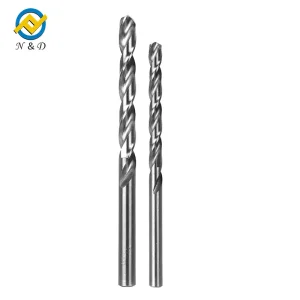
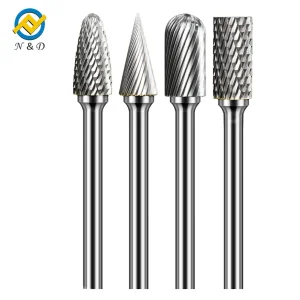
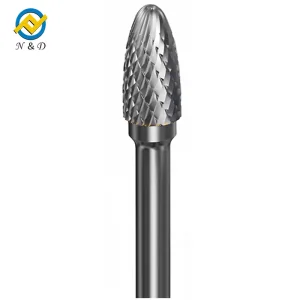
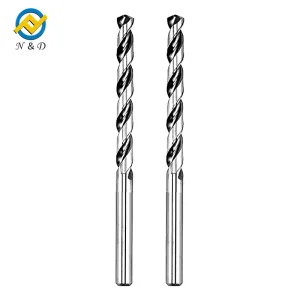
With infrastructure projects expanding in Cotonou and Porto-Novo, local steel fabrication yards rely on our high-performance twist drills and rotary burrs to drill and deburr Structural Steel (S235/S355) and rebar assemblies quickly and accurately.
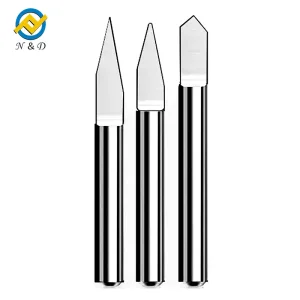
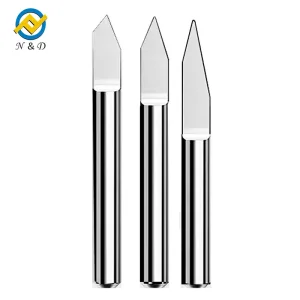
Benin exports highly valued local timbers like Teak, Iroko, and Mahogany. These dense, abrasive woods rapidly dull conventional steel cutters. Our single-flute and multi-flute spiral router bits maintain clean, splinter-free edges throughout long-run production cycles.
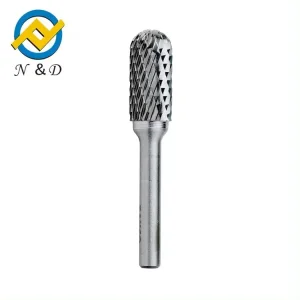
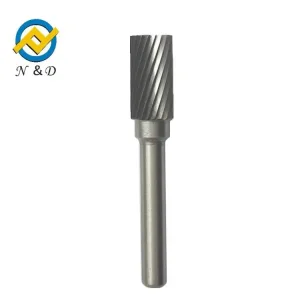
The Autonomous Port of Cotonou is a major commercial entry point for the West African hinterland. Dredging equipment, marine vessels, and crane components need specialized repairs. Our high-precious ball nose end mills and cylinder burrs are ideal for repair machining on high-tensile bronze, brass, and stainless alloys.
Browse our core inventory. Direct-factory shipping and volume discounts are available on all industrial cutting solutions listed below.
Using solid carbide tools in warm and humid environments like Benin requires specific adjustments. Our engineers recommend implementing these best practices to maximize the tool life of your purchases:
Thermal cracking is a major cause of micro-chipping on carbide edges when coolant is applied unevenly. If your milling setup cannot guarantee a continuous high-pressure flood of coolant, it is safer to run dry milling with compressed air, particularly when machining hardened steels with AlTiN-coated tools. This prevents the rapid heating and cooling cycles that stress the material.
Unlike HSS tools, which flex under load, solid carbide is highly rigid and can break if subjected to excessive deflection. Inspect your CNC spindle runout and chuck collet wear regularly. Ensure runout is kept below 0.01mm to prevent uneven loading on the cutting flutes, which leads to premature wear.
1. Tool Edge Chipping: Often caused by excessive vibration or running a feed rate that is too high. Solution: Reduce feed per tooth, check part clamping rigidity, and switch to a tool with a larger core diameter or a radiused corner profile.
2. Built-Up Edge (BUE): Common when machining soft aluminum alloys or copper in humid conditions. Material welds itself to the cutting edge. Solution: Increase cutting speeds, use tools with polished flutes, or switch to a mist lubrication setup.
3. Rapid Flank Wear: Caused by abrasive wear at excessive spindle speeds. Solution: Reduce cutting speed (SFM), use a tool with a higher wear resistance coating, or verify that hardness grades match your material type.
Review these detailed answers covering technical selection, logistics, and bulk ordering of CNC tooling for Benin.
Ready to upgrade your manufacturing operations in Benin? Send us your tooling specifications, material details, and estimated monthly quantities. Our engineers will provide a detailed quote and tool life analysis within 24 hours.
 N&D Carbide