Optimized substrate grades specifically chosen to meet rigorous tolerances in defense contracting and precision medical mold making.
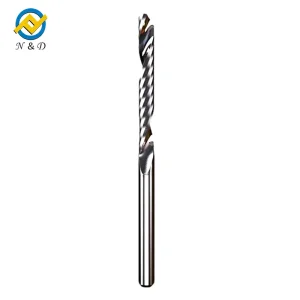
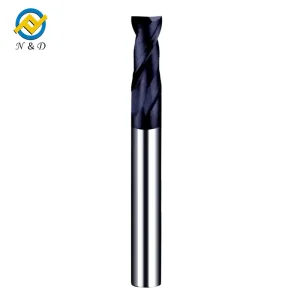
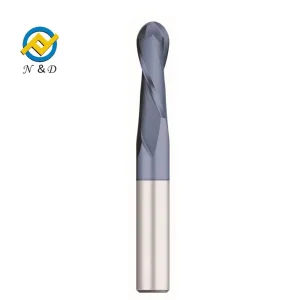
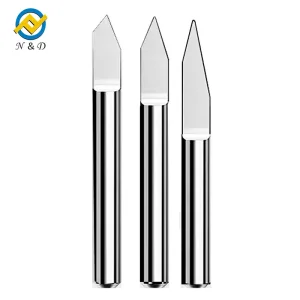
Boston, Massachusetts, and the surrounding Route 128 technology corridor host one of the most advanced manufacturing ecosystems globally. Unlike regions dedicated to heavy raw metal smelting, Boston's manufacturing signature is characterized by high-tech, low-volume, ultra-precise manufacturing. From the advanced defense operations of Raytheon and General Electric in Lynn to the medical device centers of Waltham and the academic robotics laboratories of Cambridge, the demand for precision tooling is unparalleled.
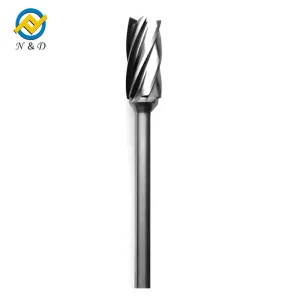
At the heart of this manufacturing ecosystem lies a critical component: the Solid Carbide End Mill. Machining materials such as titanium alloys (Ti-6Al-4V), stainless steel (316L, 17-4 PH), Inconel 718, and carbon-fiber-reinforced polymers (CFRP) requires cutting tools that can withstand high temperatures, maintain sharp cutting edges, and prevent thermal distortion. Standard tools simply fail when subjected to the speeds and feeds demanded by modern CNC setups in New England.
Procurement professionals and engineers managing global supply chains face a delicate balancing act: maintaining exceptional tool performance while optimizing cost structures. Solid carbide raw material (tungsten ore and cobalt matrix) pricing is subject to complex international geopolitical and market factors. Leading factories must implement advanced manufacturing protocols to provide consistent product quality at scale.
| Industry / Material Group | Dominant Application Challenge | Optimal Carbide Solution | Boston Local Focus Area |
|---|---|---|---|
| Aerospace Propulsion | High-heat deformation of Titanium Ti-6Al-4V | 4/5 Flute AlTiN PVD Coated Mills with unequal index geometries | East Boston & Lynn Propulsion Shops |
| Bio-Medical Implants | Burr-free micro-milling on PEEK and Co-Cr alloys | Diamond-Like Carbon (DLC) & sub-micron grain Ball-Nose mills | Waltham & Worcester Orthopedics Hubs |
| Defense Systems | Interrupted cuts on high-hardness armor plates | High-cobalt substrates with optimized variable helix angles | Bedford & Hanscom Military Contractors |
| Semiconductor & Optics | Absolute dimensional stability in cleanroom mold tooling | Ultra-fine grain carbide with polished flutes | Lexington & Quincy Micro-Machining Centers |
By combining sub-micron carbide grain substrates with optimized coating technologies, our factories provide high-performance solutions designed to meet New England's stringent machining specifications. We offer standardized high-volume production alongside custom engineering programs, helping Boston-based procurement teams build resilient, cost-effective tooling supply chains.
In high-speed machining (HSM), system harmonics can severely impact tool life and surface finish. When standard end mills rotate at high speeds, consistent flute engagement can create rhythmic vibrations known as chatter. This chatter causes micro-fractures along the cutting edge, leading to premature tool failure and poor surface finishes.
Our high-performance solid carbide end mills address this challenge with **variable index flutes and unequal helix angles**. By varying the flute spacing and helix angle, the cutter interrupts the harmonic rhythm of high-speed machining, dampening vibrations and enabling significantly higher metal removal rates (MRR) without sacrificing finish quality.
Modern high-precision manufacturing is increasingly moving toward dry machining or Minimum Quantity Lubrication (MQL) systems to minimize environmental impact and lower clean-up costs. However, cutting without flood coolant exposes the tool's cutting edge to intense thermal stress, with temperatures at the cutting zone often exceeding 800°C.
Our multi-layered nanocomposite PVD coatings act as a durable thermal barrier. Under high temperatures, these coatings form a protective micro-layer of aluminum oxide (Al2O3). This oxide layer acts as a heat shield, redirecting thermal energy away from the carbide substrate and into the chips, preserving the tool's core hardness and extending its useful life.
Our manufacturing process utilizes advanced technical protocols to ensure the mechanical properties and dimensional accuracy of every solid carbide tool.


Boston's robust tech and academic community, anchored by research institutions like MIT and Harvard, frequently works with highly specialized, new materials. These unique compounds often require custom tool geometries. Our flexible manufacturing capabilities enable us to produce custom solid carbide tooling tailored to your exact geometries and specifications. We offer rapid prototype runs and comprehensive technical consultation to support New England manufacturers in bringing innovative designs to market.
For military, defense, and medical device manufacturing, material traceability is a critical requirement. Our solid carbide tools undergo comprehensive quality testing to ensure performance consistency. We provide material certifications and detailed traceability data for every batch of tungsten carbide produced, meeting the strict quality documentation standards required by leading aerospace and medical manufacturers.
Supply chain delays can disrupt assembly lines and lead to costly production downtime. To support reliable production schedules, we offer customized stocking and replenishment programs. We partner with local distributors across New England to ensure that critical tooling geometries and standard end mills are readily available, helping you maintain optimal inventory levels and reduce lead times.
Engineered for high durability and consistent performance in aggressive slotting, contouring, and finishing operations.
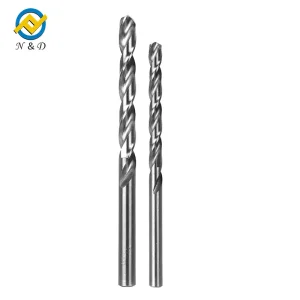
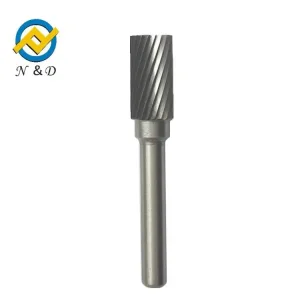
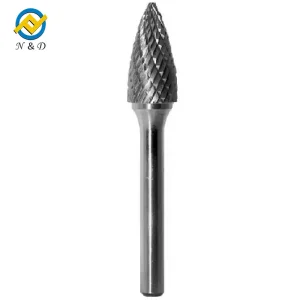
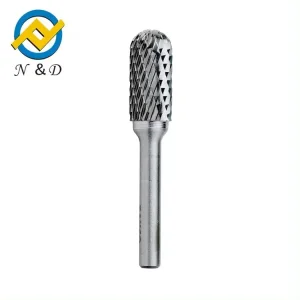
Answers to common technical and procurement questions regarding solid carbide tools and high-precision machining.
 N&D Carbide