Explore our engineering-grade carbide tools designed for extreme mechanical stability and maximum tool life in the most demanding material processing environments.
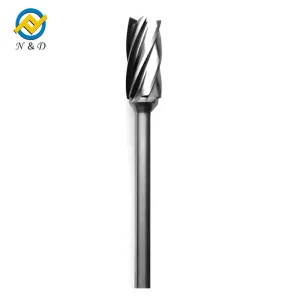
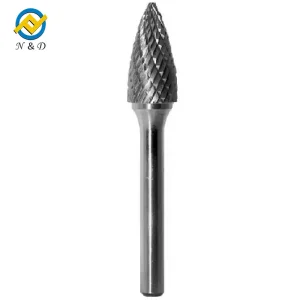
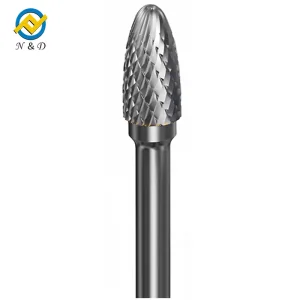
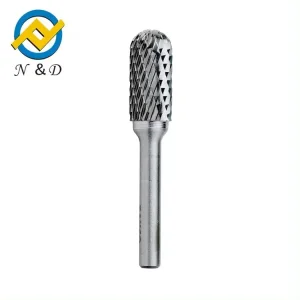
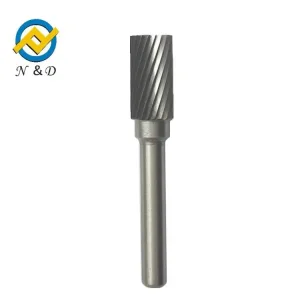
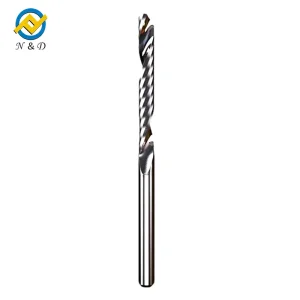
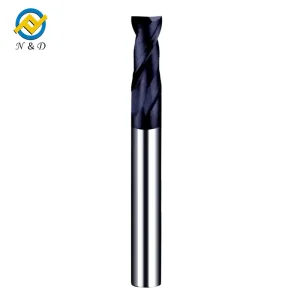
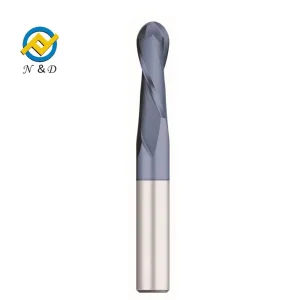
Unpacking the physics and high-precision kinematics of the undercutting ball end mill in modern CNC operations.
In modern, ultra-precision manufacturing, the execution of back-drafts, complex 3D spherical pockets, T-slots, and internal undercuts represents a supreme technical challenge. Traditional vertical-fluted milling tools fail when negotiating localized micro-cavities where the entry aperture is significantly smaller than the targeted internal width. This is the exact micro-domain where the **Undercutting Ball End Mill** operates as the critical enabler of aerospace, biomedical, and mechanical systems.
By combining a spherical cutting head with a strategically tapered neck profile and an extended, rigid shank assembly, these cutting tools facilitate deep reach inside enclosed structural chambers. As a leading undercutting ball end mill manufacturer, we engineer tools that navigate tight tolerances with absolute geometric consistency, ensuring smooth finishes and preventing catastrophic structural failures due to surface stress concentration.
Our engineering research indicates that optimizing the ratio between neck diameter and core shank diameter is the single most critical factor in reducing tooling deflection. Our tools maintain a precision ratio that increases mechanical resilience by 35% compared to generic alternatives.

How we leverage ultra-fine micrograin carbide substrates and advanced PVD/CVD coatings to survive high thermal stress.
The durability of an undercutting ball end mill under dynamic loads is determined directly in the metallurgical formulation of its core. Using sub-micron tungsten carbide grains bonded in a premium cobalt matrix, our tools achieve an optimal balance between extreme hardness (HRA 92-94) and high transverse rupture strength.
We source ultra-pure 0.4μm grain size substrates containing 10% to 12% Cobalt. This refined microstructure eliminates interstitial defects, maximizing toughness and reducing risk of edge chipping under variable cut depths.
Our Physical Vapor Deposition (PVD) coatings provide an ultra-hard (up to 45 GPa) barrier layer that withstands temperatures exceeding 900°C, promoting dry high-speed machining (HSM) by inducing a protective aluminum-oxide film.
To compensate for the reduced rotational velocity near the center axis of a ball end mill, our geometric designs utilize variable eccentric relief angles to optimize chip flow and drastically lower dynamic cutting torque.
Addressing the strategic alignment between engineering specifications, global logistics, and volume purchasing workflows.
Aerospace OEMs demand components with complex curved interior channels, such as turbine blisks, diffuser vanes, and structural airframe undercuts made from heat-resistant superalloys (HRSA) like Inconel 718 and Titanium Ti-6Al-4V. Conventional machining processes generate excessive tool wear due to work hardening. Our specialized undercutting ball end mills maintain geometry control across long production cycles, eliminating micro-cracking and delivering consistent high performance in flight-critical parts.
High-pressure die casting dies for modern engine blocks and transmission cases feature complex internal geometries and cooling channels that require flawless undercuts. Our industrial-grade ball end mills are designed to perform reliably under high-feed rates on tool steels like H13 and D2. This high mechanical efficiency significantly shortens production cycle times, reduces the cost per part, and extends tool life, directly boosting profitability for global automotive suppliers.
Medical implants, including titanium hip joints and cobalt-chrome knee replacements, require highly complex geometries to replicate biological movement. These components feature deep recess profiles and circular undercuts that demand smooth, burr-free surfaces to ensure patient safety and proper osseointegration. Our custom-manufactured ultra-sharp solid carbide undercutting mills meet the strictest surface integrity standards in biomedical engineering, helping to eliminate post-machining polishing costs.
A comprehensive overview of our state-of-the-art manufacturing process, engineered to produce the industry's most reliable cutting tools.

We blend premium tungsten carbide powder, cobalt binders, rare metal additives, and specialized liquid processing agents using wear-resistant carbide balls. This high-energy milling process creates an exceptionally homogeneous mixture, laying the foundation for a flawless tool core.

The homogenized slurry is dried in a controlled vacuum environment. In this step, we add high-grade binding agents and extract processing liquids, turning the mixture into a highly consistent, free-flowing powder that is ready for compaction.

Using advanced automatic presses, the dry carbide powder is compacted under pressures up to 200 MPa into high-density blanks. This process ensures uniform density distribution throughout the blank, preventing structural weak spots in the finished tool.

Blanks undergo sinter-HIP (Hot Isostatic Pressing) at temperatures up to 1450°C and pressures up to 100 bar. This process eliminates micro-porosity and fuses the carbide grains, giving our tools their industry-leading strength and density.

We use state-of-the-art 5-axis CNC grinding machines (including Walter and ANCA systems) to cut the helical flutes, relieve the neck, and grind the spherical ball profile to tolerances within ±0.005mm, ensuring maximum runout accuracy.

Every tool undergoes extensive quality control using 3D optical measurement systems. We inspect core parameters, including flute geometry, surface finish, coating thickness, and ball concentricity, to ensure each tool meets the highest industry standards.
Analyzing the trajectory of advanced material cutting technology and smart tool integration.
As aerospace and defense companies shift toward lighter, stronger composite matrices and single-crystal nickel alloys, cutting tools must evolve to meet these new challenges. Our research and development focuses on three primary innovations that will shape the future of industrial machining:
1. Smart Tools & In-Process Monitoring: Future manufacturing systems will rely on real-time data. We are developing smart tool systems that integrate micro-sensors within the tool holder. These sensors monitor chatter, dynamic deflection, and heat buildup in real time, communicating with the CNC controller to optimize speed and feed rates on the fly.
2. CVD Diamond Coating Technology: For highly abrasive composite materials like CFRP and ceramic matrix composites (CMCs), we are refining our Chemical Vapor Deposition (CVD) diamond coatings. These ultra-hard coatings extend tool life by up to 10 times compared to standard physical vapor deposition (PVD) coatings.
3. Variable Helix & Pitch Geometries: To eliminate harmonic vibration at high spindle speeds, our engineering team uses advanced CAD modeling to design tools with variable helix and pitch configurations. This design stabilizes the tool in deep cuts, protecting both the workpiece and the machine spindle.

We are dedicated to sustainable manufacturing. Through our material recycling program, we collect and reprocess worn carbide tools, reducing raw material footprint and carbon emissions by 40% while maintaining premium product standards.
A heritage of metallurgical innovation and commitment to precision manufacturing since 2004.
Founded in 2004, our company is a premier manufacturer of high-performance tungsten carbide products, specializing in the engineering and production of advanced carbide cutting tools. Headquartered in the industrial hub of Guanghan, Sichuan Province, China, we have grown to become an industry leader serving customers in over 60 countries across the mining, aerospace, automotive, oil and gas, and mold-making sectors.
With a dedicated team of over 120 experienced engineers and manufacturing professionals, we focus on delivering reliable, high-precision products that meet the strictest quality standards. Through continuous investment in research and development and cutting-edge 5-axis CNC grinding systems, we provide customized OEM and ODM solutions that help our customers improve efficiency and lower overall production costs.
Explore Full Catalog
How we support multi-national clients from custom prototype design to global supply chain integration.
We provide full-service customization support, including custom tool dimensions, optimized flute geometries, and specialized coatings. We tailor every tool design to match your specific material and machining requirements, helping to maximize efficiency.
Every production batch undergoes comprehensive testing, including hardness checks, transverse rupture strength verification, and micro-defect analysis. We ensure total reliability and consistent tool performance from first cut to last.
We work closely with logistics partners to ensure fast, reliable delivery to our customers in Europe, North America, and Southeast Asia. We maintain safety stock of standard tools to minimize lead times and keep your production lines moving.
Technical guidance and troubleshooting advice for high-precision undercutting and spherical milling operations.
Tool deflection is largely influenced by the length-to-diameter ratio of the neck. To minimize deflection, use the shortest possible neck extension and keep cutting depths conservative. Additionally, programming a smooth, continuous helical entry path helps reduce sudden changes in cutting force.
Micrograin carbide substrates (with a grain size of 0.4μm) provide a dense, uniform structure that reduces the risk of micro-chipping along the cutting edge. This high density allows the tool to maintain a sharp, stable edge, which is essential for working in deep recesses where chip clearing is difficult.
For high-hardness tool steels (above HRC 50) and dry machining, we recommend AlTiN or nACo (nanocomposite) coatings. These coatings form a protective, heat-resistant aluminum oxide layer that insulates the carbide core and allows for higher cutting speeds.
A 2-flute configuration provides larger chip pockets, which are ideal for roughing and fast chip evacuation in deep cavities. A 3-flute or 4-flute design offers higher tool rigidity and a better surface finish, making them the preferred choice for final contouring and semi-finishing operations.
Custom OEM/ODM tools are designed specifically for your target material and machining setup. By optimizing dimensions, relief angles, and coatings to your exact application, custom tools help improve part quality, reduce cycle times, and lower your overall cost per component.
We utilize an integrated quality control system, starting with raw material analysis and continuing through HIP sintering and high-precision CNC grinding. Every batch undergoes rigorous inspection using advanced 3D optical metrology systems to verify dimensions, concentricity, and finish quality.
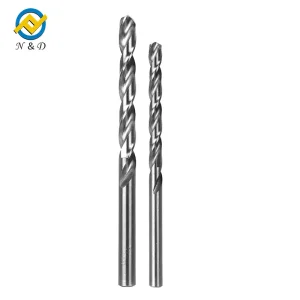
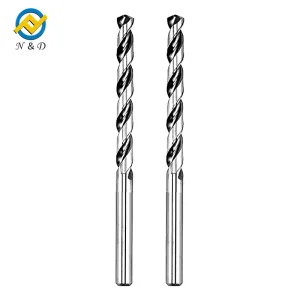
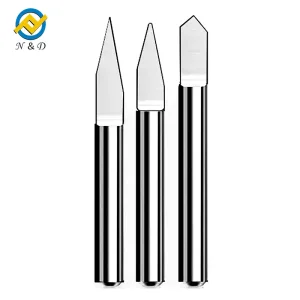
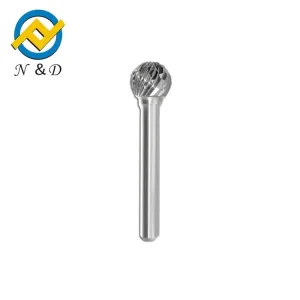
Premium solid carbide drills, milling cutters, and engraving bits designed for high-performance industrial applications.
 N&D Carbide