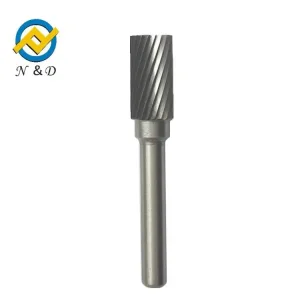
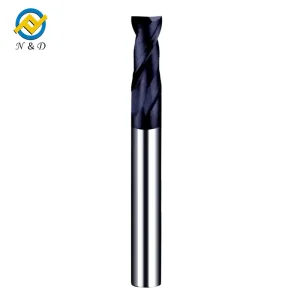
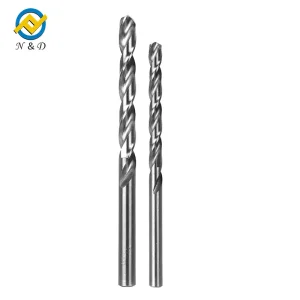
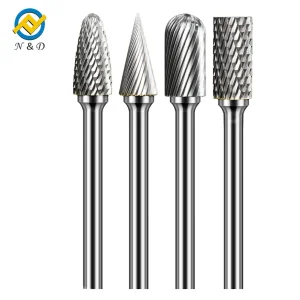
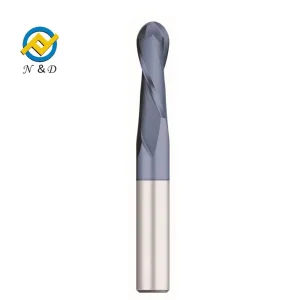
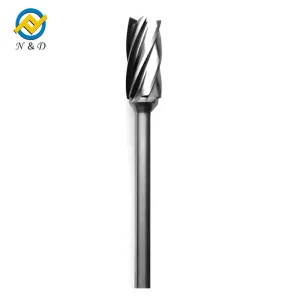
In modern high-speed machining (HSM) and multi-axis CNC profiling, the mechanical limits of tooling often dictate the throughput boundaries of high-value manufacturing plants. Among the array of rotary cutters, the Tapered Ball Nose End Mill (TBNEM) occupies a paramount position. Characterized by its conical core profile that smoothly transitions into a hemispherical nose radius, this engineering marvel effectively resolves one of the most persistent bottlenecks in complex cavity milling: radial tool deflection and surface finish degradation.
Standard ball nose end mills feature a constant cylinder diameter along their functional length, leaving them susceptible to bending moments and harmonic vibration during deep-reach pocketing. Conversely, a tapered design distributes structural stiffness parabolically. By reinforcing the neck area of the cutter with a gradual taper angle (typically ranging from 0.5° to 15°), the tool’s area moment of inertia increases exponentially toward the shank. This structural reinforcement yields unprecedented rigidity, drastically minimizing core vibration, chatter, and micro-chipping at the cutting zone.
From an applied mechanics perspective, tool deflection ($y$) varies proportionally to the cube of the overhang length ($L^3$) and inversely to the fourth power of the core diameter ($d^4$). By utilizing a tapered profile, manufacturers strategically expand the effective diameter ($d_{eff}$) along the length of the tool holder attachment point. Consequently, deflection is suppressed by up to 60% compared to equivalent-length straight neck designs. This structural stiffness translates into tighter dimensional tolerances on 3D compound curved profiles, crucial for mold-making and aerospace structural bulkheads.
We source highly uniform sub-micron tungsten carbide grains (0.4μm - 0.6μm). A balanced 10%-12% Cobalt binder content ensures high fracture toughness and resistance to edge micro-chipping under cyclic mechanical loads up to 65 HRC.
Equipped with AlTiN and TiSiN (Titanium Silicon Nitride) multi-layer physical vapor deposition. These coatings withstand extreme oxidation temperatures (up to 1100°C) and provide a low friction coefficient for efficient chip evacuation.
High-temperature chemical stability ensures minimal chemical wear (crater wear) on high-feed tooling, keeping the nose cutting edge sharp during continuous, uninterrupted finishing cycles.
Across the global manufacturing landscape, precision tool performance is a primary determinant of commercial scalability. Tapered Ball Nose End Mills are essential for key high-value industrial sectors:
Milling integrally bladed rotors (blisks) and gas turbine blade roots requires machining complex, deep, and narrow slots in heat-resistant superalloys like Inconel 718 and Titanium Ti-6Al-4V. TBNEMs provide the stiffness to deep-mill root profiles while maintaining tight contour tolerances.
Large-scale plastic injection molds (e.g., bumper covers, door panels) require deep, draft-angled pockets. A tapered end mill allows mold makers to match the design's draft angle exactly. This reduces roughing-to-finishing transition times and optimizes surface quality.
Biocompatible metallic parts, such as titanium femoral components for knee replacements, have complex, continuously variable organic curvatures. TBNEMs enable efficient 5-axis trochoidal toolpaths to generate smooth surfaces directly from the machine, minimizing manual polishing.
In response to global reshoring initiatives and decentralized supply chain models, precision manufacturers require immediate tooling availability and predictable tool life. Modern production environments rely on deterministic wear behaviors. Our processes are designed to deliver reliable performance, helping minimize unexpected downtime in automated, lights-out machining operations.

We blend micro-grain tungsten carbide powder, pure cobalt binder, rare alloy metals, aviation gasoline, and carbide balls to achieve a homogeneous structural composition.

The wet mixture is thermally dried in a controlled vacuum. Ginseng gum binders are integrated, and the residual gasoline solvent is filtered out safely.

The homogeneous carbide powders are compacted under high-pressure presses to form high-density green compact blanks with highly uniform density profiles.

We process the pressed blanks in Sinter-HIP furnaces at temperatures up to 1450°C and pressures under 100 bar, eliminating internal porosity and establishing phase integrity.

Advanced 5-axis CNC tool grinding machinery is utilized to execute the helix angle, primary relief angles, and taper transitions in a single setup for concentricity.

Comprehensive automated inspection tests each tool for radial run-out, core thickness symmetry, and surface roughness parameters using laser non-contact scanning.
We provide flexible customization of tool dimensions, including non-standard taper angles, reach lengths, and specific flute chamfers designed for proprietary workpiece requirements.
Our tools are engineered to resist chemical deterioration and physical abrasive degradation under demanding cutting conditions and thermal stress.
Our rigid core design allows for higher feed rates per tooth, reducing total cutting cycle times without compromising the quality of the finish.
Our experienced team helps optimize cutting speeds, radial/axial depth ratios, and coolant configurations to maximize tool life.
Operating a global supply chain requires adherence to diverse technical standards. Our manufacturing and distribution operations are structured to support localized compliance needs in key economic regions:
We ensure trace metallurgical documentation and sizing consistency according to US standard inch units. We also support ANSI tool geometries and ISO tool holders for trouble-free setup on domestic CNC machining centers.
Our raw material sourcing complies with REACH chemical safety initiatives, and all end mills conform to DIN standards (such as DIN 6527 and DIN 6535 shanks). This allows seamless installation in high-end European machining equipment.
By partnering with international air express networks and deep-water ocean cargo carriers, we coordinate reliable delivery schedules and customs clearance support to production centers across 60+ countries.
As the machining industry transitions from computer-aided manufacturing to fully autonomous, sensor-driven production, the demand for smart, high-performance tooling is rising. We monitor these emerging technologies to adapt our production techniques accordingly:
Our engineering division is developing diamond-like carbon (DLC) coatings with microhardness ratings exceeding 60 GPa, aimed at reducing tool wear when dry-cutting abrasive composite laminates and carbon fiber reinforced plastics (CFRP).
We are incorporating variable helix angles and unequal indexing designs into our tapered ball nose configurations. This structural variation disrupts harmonic frequencies, reducing cutting noise and improving surface finish.
We are designing specialized end mills to meet the challenges of machining 3D-printed metal components, which often exhibit irregular surface layers and localized hardness variations.
The primary advantage is structural rigidity. The tapered profile increases the core diameter toward the shank, which reduces tool deflection under lateral loads. This stability allows for deeper pockets, higher feed rates, and a more uniform surface finish in 3D pocketing applications.
The taper angle is determined by the draft angle of the cavity wall. For vertical profiling, the tool’s half-taper angle should ideally match or be slightly less than the workpiece draft angle to prevent heel clearance issues while maintaining the maximum possible tool thickness.
For high-hardness steels, TiSiN (Titanium Silicon Nitride) and AlTiN coatings are highly recommended. These coatings develop protective, high-temperature oxide barriers that limit thermal transfer into the carbide core and reduce adhesive wear.
Standard tool profiles are generally available for immediate shipment. For custom OEM/ODM designs, lead times typically range from 2 to 3 weeks following technical specification approval. We offer flexible MOQs depending on the size and complexity of the tooling.
 N&D Carbide