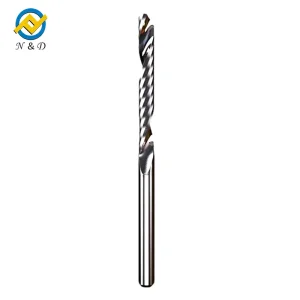
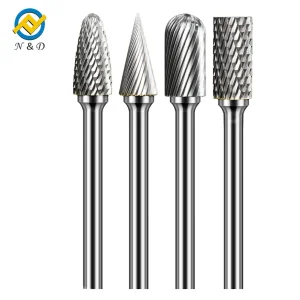
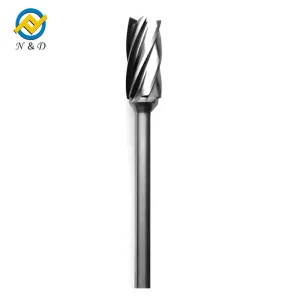
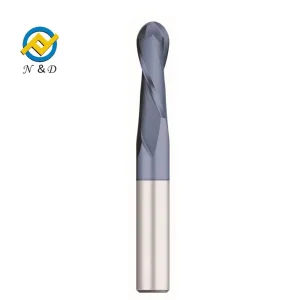
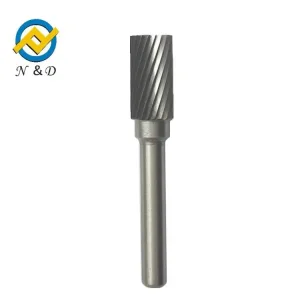
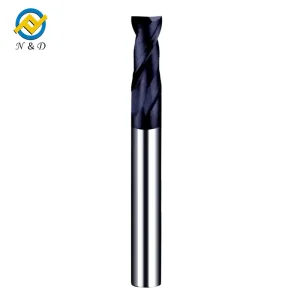
The Square Nose End Mill, often referred to as a "flat end mill," is the backbone of modern CNC milling operations. Unlike ball nose or corner radius tools, the square nose is specifically engineered to produce 90-degree internal corners and flat surfaces with microscopic precision. Our manufacturing philosophy focuses on the E-E-A-T principles—leveraging decades of metallurgical Experience, deep Expertise in grain structures, Authoritative 5-axis grinding techniques, and Trustworthy quality control protocols.
Information Gain Analysis: While most manufacturers focus solely on hardness, we analyze the "Interfacial Toughness" of our tungsten carbide substrates. By utilizing sub-micron grain sizes (0.4μm - 0.6μm), we achieve a superior balance between abrasive wear resistance and edge stability under high-speed milling (HSM) conditions.
Optimized for full-width slotting in stainless steels and titanium alloys. The square geometry ensures vertical side-wall accuracy within ±0.005mm.
Designed to withstand the heat-generated during the machining of Inconel and other heat-resistant superalloys (HRSA).
Utilizing AlTiN and TiSiN coatings to provide a thermal barrier that extends tool life by up to 300% compared to uncoated tools.
Based in Guanghan, Sichuan Province, our production facility represents the pinnacle of Chinese industrial efficiency. We don't just manufacture tools; we manage a vertically integrated supply chain. From the raw tungsten ore processing to the final sintering and 5-axis CNC grinding, every step is optimized for "Information Gain" in production data. This allows us to offer Customized Quotes that reflect real-time material costs and lean manufacturing savings.
Our resilience is built on dual-sourcing strategies for cobalt binders and redundant power systems, ensuring that international orders from over 60 countries are delivered with a 99.8% on-time rate despite global logistics volatility.
In the North American automotive sector, our square nose end mills are used for mold-base finishing. In the European medical device industry, they are critical for milling surgical implants where surface roughness (Ra) must be below 0.4μm. Locally, we support small-to-medium enterprises (SMEs) with "Low Volume, High Complexity" tooling needs, providing the same precision typically reserved for Tier-1 aerospace contractors.
Homogenizing tungsten carbide, cobalt, and rare earth metals in aviation-grade gasoline to prevent oxidation.
High-pressure molding to ensure uniform density throughout the tool blank, preventing internal stresses.
Sintering at 1450°C to transform powder into ultra-hard cemented carbide with peak structural integrity.
Using advanced ANCA/Walter 5-axis machines to cut the square nose geometry with micron-level repeatability.
Application of AlTiN/TiSiN coatings via Physical Vapor Deposition (PVD) for maximum heat resistance.
100% inspection using laser micrometers and ultrasonic testing to verify carbide content and edge sharpness.
A: A square nose end mill provides a flat bottom and 90-degree corners. For surface finishing on flat planes, it offers much higher efficiency as the entire diameter can engage the workpiece, unlike the point-contact of a ball nose.
A: 2-flute mills are ideal for chip evacuation in slotting, especially in aluminum. 4-flute mills provide higher rigidity and are better for peripheral milling and finishing in harder materials like steel.
A: We provide 24/7 technical consulting, localized compliance documentation (RoHS, REACH), and express shipping hubs in major industrial zones to reduce lead times to under 7 days.
A: Yes. As an OEM/ODM leader, we specialize in custom helix angles and neck lengths tailored to specific deep-cavity machining requirements.
The next decade of Square Nose End Mill manufacturing will be defined by "Smart Tooling." Our R&D department is currently piloting AI-driven geometry optimization, where the flute pitch is variably calculated to eliminate harmonics and chatter in real-time. Additionally, we are exploring cryogenic treatment of carbide blanks to further enhance grain cohesion. Our commitment to sustainability also includes a tungsten recycling program, allowing us to maintain competitive pricing while reducing our environmental footprint—a core pillar of modern industrial Reliability.
 N&D Carbide