Explore our industrial range of precision-manufactured cutting, drilling, and engraving tools designed for superior durability and high-efficiency operations.
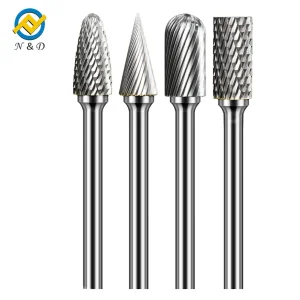
Understanding Substrate Quality, Flute Geometries, and Production Integrity in Global Procurement
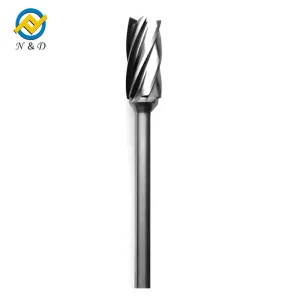
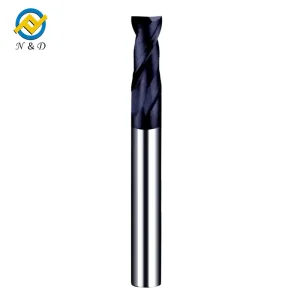
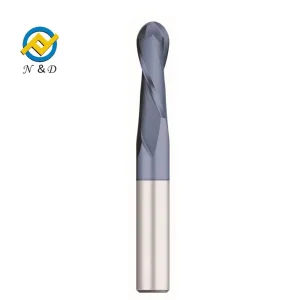
In modern high-speed CNC machining (HSM), the demand for high-performance milling tools is expanding exponentially. Among all tooling profiles, the Square End Mill Bit remains the absolute workhorse for pocketing, profile milling, slotting, and step-shoulder operations. The engineering behind these micro-tools determines not only the surface finish quality of the manufactured part but also the overall equipment effectiveness (OEE) of multi-million dollar machining centers. Selecting high-quality square end mill bits requires a deep understanding of metallurgy, physical vapor deposition (PVD) coatings, and mechanical geometries designed to withstand high stress levels.
This technical whitepaper explores the critical indicators of premium-grade square end mill bits, analyzing material composition, tool geometric engineering, international procurement trends, and advanced coating processes. By aligning purchasing requirements with scientific performance indexes, global procurement directors and CNC engineers can maximize material removal rates (MRR), significantly decrease tool wear cycles, and secure reliable supply channels.
Engineered with ultra-fine grain tungsten carbide (0.2μm to 0.5μm) and optimal cobalt content to ensure high hardness and fracture toughness.
Variable helix designs and unequal index pitch configurations engineered to suppress harmonic vibrations (chatter) during high-feed milling.
Next-generation nanocomposite coatings such as nACo and AlTiN protect cutting edges against heat, extending tool life by up to 200%.
Key priorities for industrial buyers sourcing high-performance rotary burrs, end mills, and carbide drills.
Procuring raw tooling systems on a global scale is not merely a purchase transaction—it is a critical supply-chain integration. Industrial purchasing managers, operations directors, and technical engineers evaluate different performance dimensions when sourcing cutting tools. The table below maps search intent to real-world engineering solutions:
| Buyer Role | Primary Search Intent | Technical & Operational Evaluation Factors | Target Solution Required |
|---|---|---|---|
| Procurement Manager | Total Cost of Ownership (TCO) | Bulk quotes, consistent lead times, customs clearance paperwork, quality certification (ISO 9001). | Tiered pricing models, reliable raw material supply, comprehensive compliance certificates. |
| Production Engineer | Tool Life & Machining Consistency | Hardness retention at elevated temperatures, chip evacuating efficiency, chatter suppression. | Premium PVD coatings (AlTiN, nACo), variable helix configurations, ultra-fine grain carbide. |
| R&D / Product Designer | High-Precision Custom Geometry | Tailored shanks, custom core diameters, application-specific corner radiuses, specialized cutting steps. | Flexible ODM/OEM manufacturing, 5-axis CNC grinding machine programming capability. |
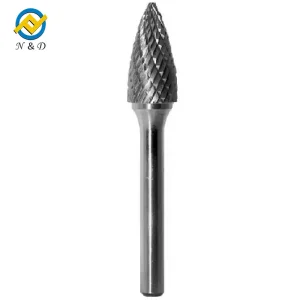
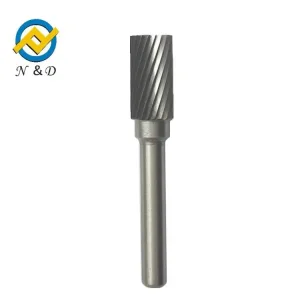
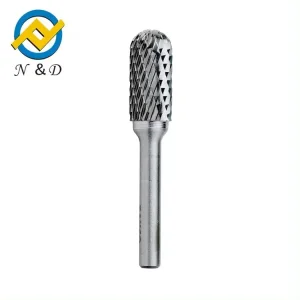
We solve these critical requirements by supplying high-performance carbide solutions that balance operational life with raw cost efficiency. Whether you require standard cylindrical rotary burrs or highly customized square end mills, our ISO-compliant facility delivers precise dimensions, consistent carbide microstructures, and superior coating adherence for demanding production environments.
Our systematic manufacturing pipeline, from powder chemistry to multi-dimensional quality inspection.
High-purity tungsten carbide powder, cobalt binders, and trace rare metals are blended in aviation gasoline with heavy alloy balls. This intensive ball-milling process ensures a uniform composite mixture for maximum material integrity.
The wet mixture undergoes controlled spray drying to fully filter out the volatile aviation gasoline. A binder agent (ginseng gum) is added, producing highly flowable composite granules ready for high-pressure compression molds.
The dry composite powder is loaded into precision tooling dies and subjected to high-tonnage uniaxial or isostatic pressing. This compacts the carbide powder into stable 'green' blanks with precise density distributions.
Blanks are processed in a vacuum Sinter-HIP furnace at temperatures up to 1450°C. High pressure is applied at peak heat to remove microscopic internal voids, achieving 99.9% metallurgical density and peak hardness.
Sintered blanks are ground on state-of-the-art 5-axis CNC grinding systems (such as Walter or ANCA machines). This process precisely forms the flutes, helix angles, relief angles, and cutting edges under continuous synthetic coolant flow.
Every finished tool undergoes inspection using laser measuring systems and high-magnification optical microscopes. We verify core diameter runout (controlled below 0.005mm), tooth profile pitch, and substrate micro-porosity.
How square end mill bits and rotary burrs perform across demanding manufacturing sectors.
No single tool configuration fits all industrial operations. The efficiency of a machining process relies heavily on selecting the correct tool geometry and coating for the workpiece material. Below is an overview of optimized applications:
Evaluating physical wear characteristics and structural design advancements in carbide tooling.
In high-speed machining, the cutting edge of a square end mill can face local temperatures exceeding 900°C. Standard, uncoated micro-grain tungsten carbide is vulnerable to thermal cracking, chemical diffusion, and abrasive wear under these conditions. Modern tool design counters this through thin-film coating deposition.
Applying thin film PVD coatings—ranging from 2 to 5 microns in thickness—creates a robust thermal barrier. Aluminum Titanium Nitride (AlTiN) coatings form a protective aluminum oxide layer at high temperatures, shielding the carbide substrate. For hardened steels (above HRC 55), nanocomposite coatings like nACo (nc-AlTiN/a-Si3N4) deliver extreme surface hardness up to 45 GPa, extending tool life in dry milling setups. For non-ferrous materials and carbon fiber composites, Diamond-Like Carbon (DLC) coatings provide low friction and prevent built-up edge (BUE) formation.
Looking ahead, future tooling trends point toward smart machining systems. As CNC systems integrate real-time sensor feedback, tool geometries must adapt to variable feed rates and automated spindle controls. We are continuously researching micro-geometries, variable helix configurations, and advanced coating formulas to ensure our tools meet these evolving high-feed standards.
Expert technical answers to common queries regarding square end mills, tool wear, and machining setups.
Founded in 2004, our facility in Guanghan, Sichuan Province, China, has grown into a key partner for global tungsten carbide production.
We supply high-quality carbide materials and precision cutting tools to a wide range of industries including mining, construction, oil & gas, aerospace, and general engineering. With over 120 dedicated employees, our team of experienced engineers and metallurgy professionals ensures that every product matches high standards of wear resistance and reliability.
Through continuous investment in research and development and modern 5-axis CNC grinding systems, we deliver standard and customized tooling solutions. Our products are exported to over 60 countries, supported by reliable logistics, clear quality documentation, and responsive customer service.
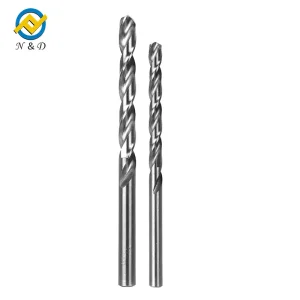
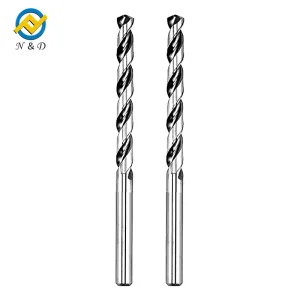
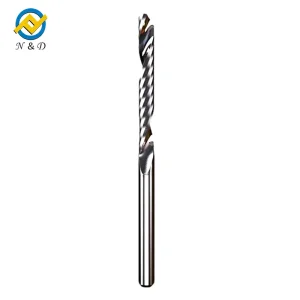
Browse our catalog of custom-ground solid end mills, high-durability cobalt drills, and specialized engraving tools.
 N&D Carbide