Industrial performance profiles manufactured in our certified Sichuan facility, engineered for high-feed rates and chip evacuation.
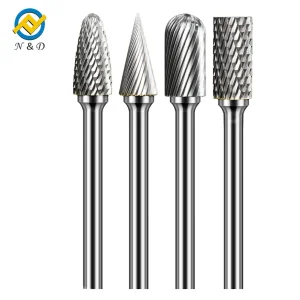
Optimized for precision metal finishing, deburring, and high-frequency weld grinding across automotive configurations.
Access Pricelist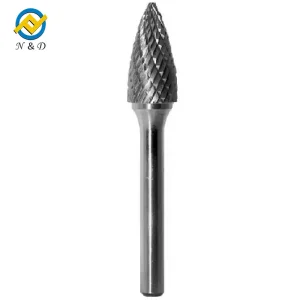
Tree-shaped cutting profile with specialized gear geometry for aggressive material removal in complex casting voids.
Request Quote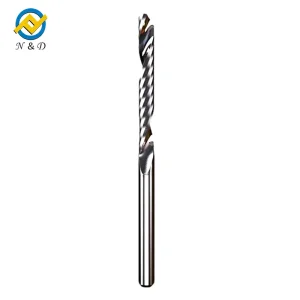
Engineered specifically for high-speed aluminum cutting with an ultra-polished flute geometry preventing built-up edge (BUE).
View Specifications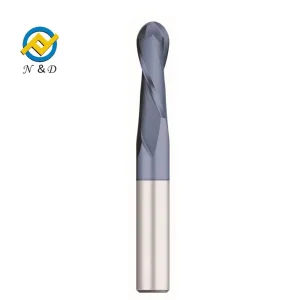
Designed for 3D contouring, pocket profiling, and multi-axis finishing of hard aluminum alloys and mold cavities.
Check Pricelist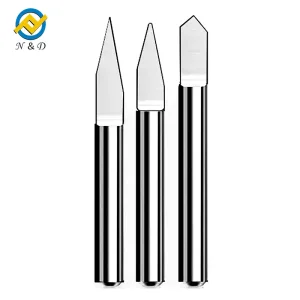
High-precision engraving tools tailored for signage, high-definition micro-machining, and electronic substrate routing.
Get Custom Rates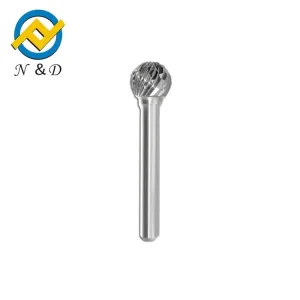
Perfect spherical heads designed for radial slotting, internal cavity sculpting, and micro-deburring operations.
Explore Series
Synergized hybrid geometry providing optimal surface finish control along multi-axis paths inside aerospace brackets.
Get Quotes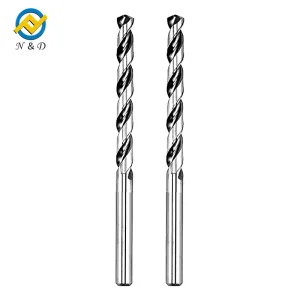
High-cobalt formulation engineered for heavy-duty drilling through hard structural metals and titanium alloys.
Request CatalogAn Industrial Deep Dive into Chip Evacuation, Tool Thermals, and Material Properties
Within the demanding parameters of modern subtractive manufacturing, the global commercial demand for light-weight structural metals—specifically high-strength 6000-series and 7000-series aluminum alloys—has surged exponentially. From massive fuselage structures in global aerospace systems to battery enclosure units within electric vehicle (EV) supply chains, structural designers demand tighter dimensional tolerances and mirror-like surface finishes. However, machining aluminum presents highly specific, physics-driven bottlenecks, most notably Built-Up Edge (BUE) and chip re-cutting, which severely degrade surface integrity and compromise tooling life.
Our engineered Single Flute Solid Carbide End Mills are specifically calculated to address this thermodynamic hurdle. By reducing the cutting geometry to a single, highly polished cutting edge, we maximize the volumetric clearance of the spiral flute. This unique geometric orientation delivers unmatched space for high-volume chip evacuation per spindle rotation. At high rotational velocities (typically 18,000 to 45,000 RPM), the centrifugal forces and tool physics eject the chips instantaneously before the heat can conduct back into the workpiece, effectively carrying away over 80% of the generated thermal energy in the chip itself.
A cutting tool is only as reliable as its baseline grain chemistry. The Sichuan-based production centers of N&D Carbide leverage custom-formulated sub-micron tungsten carbide (WC) configurations, yielding a hard phase structure bound by a 10% cobalt (Co) matrix. By reducing the WC grain dimensions to sub-micron scales (typically 0.6–0.8 μm), our materials engineers successfully maximize both the transverse rupture strength (TRS) and hardness. This dual-optimization yields an edge strength that tolerates the substantial interrupted shear loads experienced when executing high-feed slotting paths in abrasive cast aluminum alloys (such as A380/A390 grades containing high silicon volume).
Our single flute geometries also incorporate precise engineering profiles to guarantee tool stability. To eliminate harmonic oscillations (chatter), we apply a progressive helix design paired with localized cylindrical margin landing. The rake face is subjected to an exhaustive diamond-wheel mirror polishing process to lower the coefficient of friction to below 0.15, practically neutralizing BUE. To support customers requiring maximum durability, we provide tailored physical vapor deposition (PVD) surface coatings, such as Titanium Diboride (TiB2) and Diamond-Like Carbon (DLC), which remain chemical-inert to aluminum molecules even at extreme thermal interfaces exceeding 800°C.
Each production run is geometrically balanced up to G2.5 quality parameters, ensuring vibration-free operations at spindle speeds up to 40,000 RPM on high-speed CNC routers and vertical machining centers.
By achieving a microscopic surface roughness (Ra) of less than 0.1 microns on the flute rake face, chips glide off seamlessly, mitigating mechanical drag and power consumption.
Localized micro-honing on the cutting tip prevents initial micro-chipping, ensuring consistent edge retention and reliable dimensional control during prolonged production runs.
In practice, single flute end mills operate as the primary choice for highly specialized localized fabrication applications across distinct business sectors:
How We Formulate, Sinter, and grind Our Industry-Leading Carbide Tooling

Sourcing raw tungsten carbide, cobalt binders, and trace refractory metals blended with specialized fluids to ensure micro-structural uniformity.

Controlled spray-drying and filtering stages to extract fluids, creating dry structural powder ready for geometric compaction.

Tungsten carbide powder is compressed under extreme pressure in custom tooling dies, forming solid tool blanks with high-density accuracy.

Thermal fusion at temperatures up to 1500°C inside state-of-the-art HIP (Hot Isostatic Pressing) ovens, eliminating micro-voids and maximizing core density.

Leveraging high-end grinding platforms (ANCA, Walter) to execute tooth geometry, margin clearances, and highly polished micro-flutes.

Individual microscopic edge auditing, run-out analysis, and geometry mapping to ensure zero defect rates before packing.
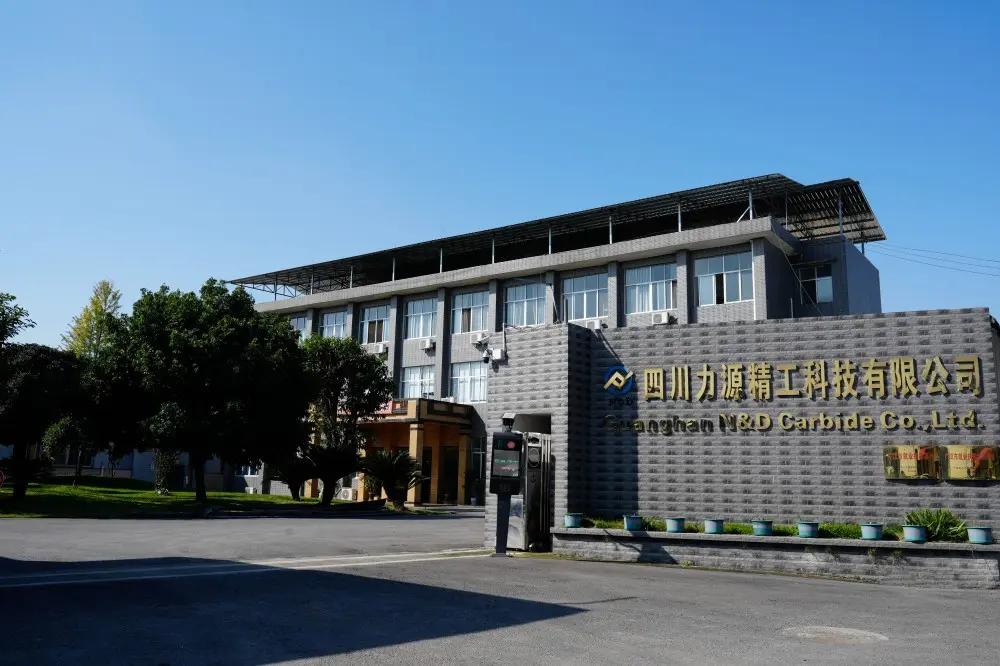
Operating a modernized manufacturing complex in Guanghan, Sichuan Province, China, N&D Carbide leverages unique geographic, logistic, and raw material advantages to serve global industrial markets. Sichuan represents one of China's primary processing centers for raw refractory metals, giving our manufacturing facilities secure, highly structured access to the finest high-purity tungsten reserves. This direct upstream integration isolates our client partners from international commodity price fluctuations and ensures a dependable, unbroken raw material pipeline.
Established in 2004, our 120-strong dedicated team combines traditional material experience with automated metallurgical workflows. We run custom ERP structures to manage every single tool batch from the raw powder state to the finished product. This end-to-end trace capability allows our engineering team to provide extensive batch certificates, chemical profiles, and structural warranties, solidifying the professional trustworthiness that top-tier OEMs and precision distributors demand.
Our research and development roadmap focuses heavily on smart tool design. We are developing tools that integrate directly with modern sensor-driven CNC setups, offering optimized geometries for minimal vibration and high chip clearance. Additionally, we are actively implementing automated edge-radiusing technologies that apply micro-sized edge preparations to protect single-flute end mills from premature wear under extreme chip loads.
Simultaneously, environmental protection is core to our operational values. We comply fully with all international safety and environmental standards, including RoHS and REACH directives, ensuring our processes remain safe and sustainable. Our Guanghan plant features advanced zero-discharge closed-loop filtration systems for recycling grinding oil and utilizes energy-efficient vacuum sintering furnaces. This approach significantly reduces the ecological footprint of our high-quality tungsten carbide production while maintaining the highest standard of structural integrity in every tool we ship.

As a seasoned OEM & ODM solution partner, we work directly with tool distributors and machine manufacturers to develop custom tooling profiles. Whether you need a specific neck relief length, localized shank steps, custom PVD coating options, or branded packaging designs, our engineering department uses advanced 3D simulation software to design, test, and manufacture bespoke cutting tools within highly efficient production lead times.
Solving Shop Floor Problems: Feeds, Speeds, and Tooling Optimizations
Direct supply paths from our Guanghan manufacturing facility to international distributors, machine shops, and fabrication networks.
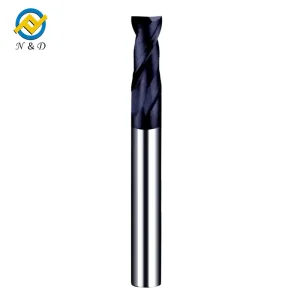
Optimized for multi-material slotting and profiling, providing high structural rigidity and consistent edge wear resistance.
Get Factory Prices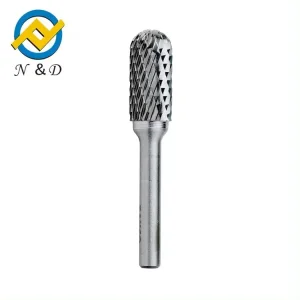
Heavy-duty cylindrical burr with a smooth ball nose tip, designed for radial edge routing and structural casting blending.
Check Pricelist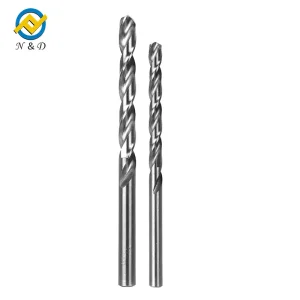
Advanced spiral geometry designed for high-accuracy hole drilling in casting alloys and composite components.
Request Specifications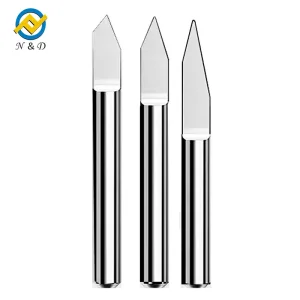
High-resolution detailing tools for 3D sign sculpting, micro-engraving, and printed circuit board (PCB) routing.
View Options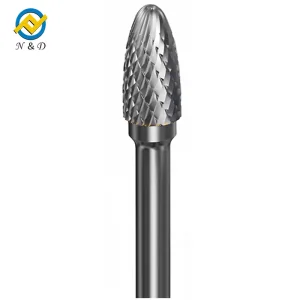
Custom-sized oval burrs designed for blending welds, cleaning rounded mold cavities, and smooth radius finishing.
Get Quotes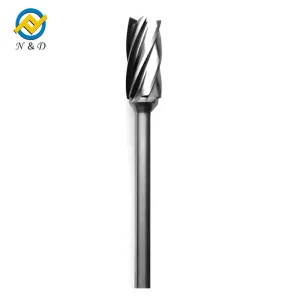
Aggressive cutting tooth profile engineered to prevent chip loading when working with highly ductile non-ferrous metals.
Best Price Inquiry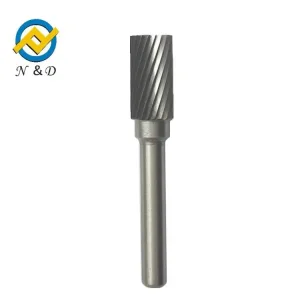
Standard cylindrical rotary burrs featuring high structural density for flat surface profiling and right-angle deburring.
Explore Series
Engineered specifically for high-speed aluminum cutting with an ultra-polished flute geometry preventing built-up edge (BUE).
View Specifications N&D Carbide