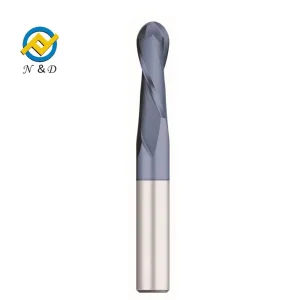
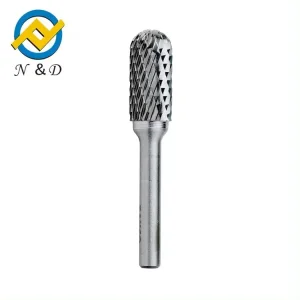
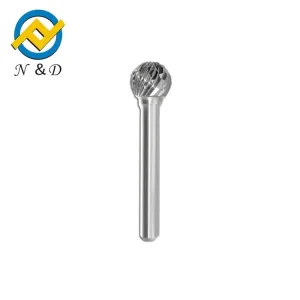
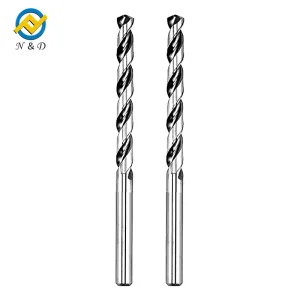
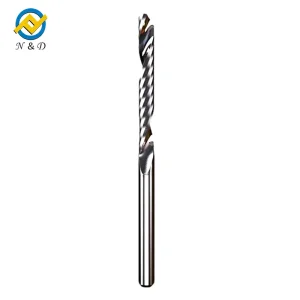
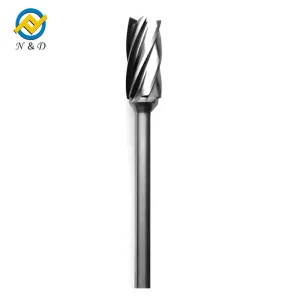
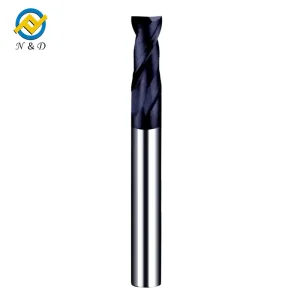
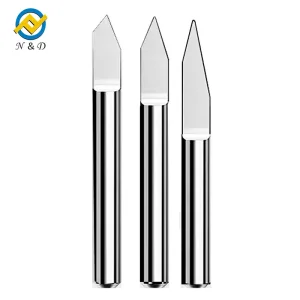
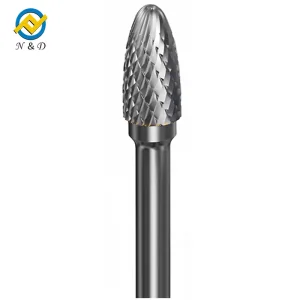
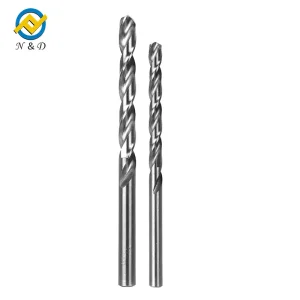
In the modern era of precision manufacturing, Reverse Helix End Mills (often referred to as down-cut mills) have transitioned from niche tools to industrial essentials. As of 2024, the global market for solid carbide end mills is projected to grow at a CAGR of 5.2%. The demand is primarily driven by the increasing use of composite materials like CFRP (Carbon Fiber Reinforced Polymer) and GFRP in aerospace and automotive sectors.
Unlike standard up-cut tools that pull chips toward the spindle, reverse helix tools push chips downward. This "Information Gain" in tool design solves a critical pain point: substrate stabilization. For manufacturers of thin-film electronics and composite panels, the reverse helix prevents "delamination" and "fraying," ensuring a clean surface finish on the top side of the workpiece.

Founded in 2004, our factory has evolved from a local supplier in Guanghan, Sichuan, to a global power player in the tungsten carbide industry. With over 120 dedicated professionals, we specialize in the metallurgical science of cemented carbide. Our expertise is not just in "selling tools," but in engineering solutions that withstand the rigors of mining, oil & gas, and aerospace applications.
We mix premium tungsten carbide powder with cobalt and rare earth elements in aviation gasoline. This ensures a grain size consistency that defines our tools' wear resistance.
Utilizing vacuum drying to remove volatile substances while adding binders that prepare the powder for complex molding.
High-pressure molding ensures the density of the carbide blank is uniform, preventing internal stress fractures during high-speed CNC operations.
The "Sinter-HIP" process densifies the material to near-theoretical levels, resulting in extreme hardness (HRA 90+) and toughness.
Using advanced 5-axis robotic grinding, we achieve the precise Reverse Helix angle required for perfect chip evacuation.
Application of TiAlN or AlTiN coatings followed by comprehensive profile inspection to ensure micron-level accuracy.
Reverse helix technology is not a one-size-fits-all. It serves specific high-stakes sectors.
In CFRP machining, "burr-free" edges are mandatory. Our reverse helix end mills ensure that the top layers of carbon fiber are pushed against the core, eliminating the risk of structural weakening during trimming.
Precision is life. For small-scale medical components made of PEEK or titanium alloys, our tools provide the stability needed for intricate geometric cuts without workpiece deflection.
Miniaturization requires tools that don't lift delicate copper traces. Our reverse helix design is the industry standard for high-density interconnect (HDI) board edge finishing.
The future of reverse helix end mill manufacturing lies in Digital Twins and Predictive Tool Life Modeling. We are currently researching variable helix geometries—where the angle changes along the flute—to further reduce vibration (chatter) and harmonic resonance during deep-cavity milling. By integrating AI into our production, we can now offer customized "Smart-Tools" that are optimized for specific CNC machine spindle speeds and torque curves.
 N&D Carbide