Explore our foundational range of heavy-duty milling machine bits, rotary burrs, and industrial drill series.
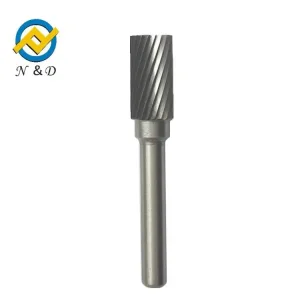
Designed for heavy metal extraction, deburring, and high-performance casting cleanups. Cylindrical structure ensures linear material removal.
Request Pricelist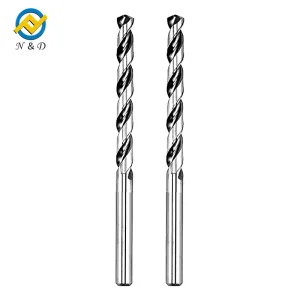
Manufactured using high-speed steel alloyed with cobalt to offer extreme thermal resistance and structural integrity during deep metal drilling.
Get Free Quote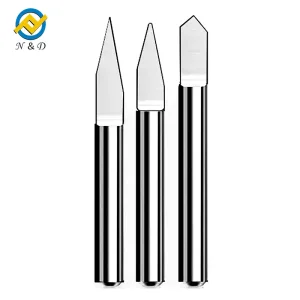
Flat-bottom configurations crafted with sharp tips for ultimate precision. Excellent for high-speed engraving on composite and alloy surfaces.
View Pricelist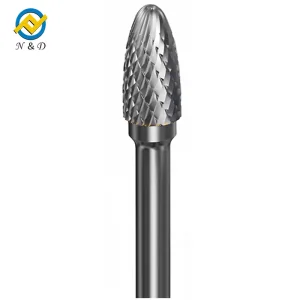
Unique Type E oval geometry. Provides maximum curved contact surface area, vital for smooth deburring and internal spherical surface polishing.
Factory Direct Quote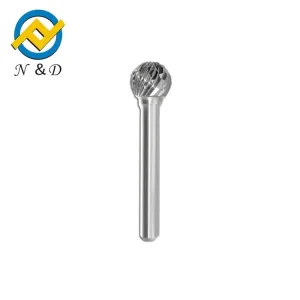
Perfect for contouring structural components, machining shallow pockets, and clearing hard radius corners under dynamic loads.
Get Bulk Price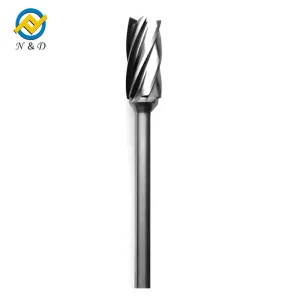
Features specific wide-flute geometries that eliminate chip clogging when profiling aluminum, copper, and soft alloy materials.
Compare Prices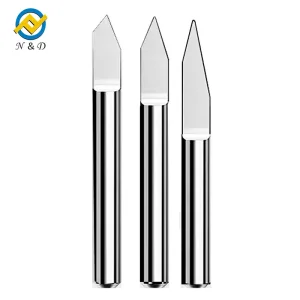
Heavy-duty engraving micro-cutters engineered for high-rigidity CNC setups, maintaining structural sharpness at elevated rotational speeds.
Request Factory Tour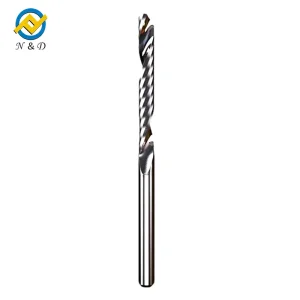
Engineered for acrylic, wood, and aluminum routing. Offers massive single-channel chip clearance preventing material welding at high RPM.
Get OEM QuoteIn high-speed CNC machining and industrial metalwork, the structural reliability of milling machine cutting bits decides the line between profit and failure. As precision tolerances shrink across aerospace, automotive, and micro-electronics industries, material formulation and structural geometries of cutting tools are undergoing a major evolution. For tooling engineers, supply chain directors, and factory sourcing managers, understanding the chemical and mechanical parameters of tungsten carbide, high-speed cobalt twist drills, and dynamic engraving tools is mandatory to guarantee stable manufacturing throughput.
The globally integrated precision manufacturing industry relies heavily on tungsten carbide tools. These tools survive under extreme thermomechanical stress where traditional steel tools fatigue and deform. Industry data shows that the demand for high-rigidity solid carbide milling bits, tree-shape rotary burrs (Type F/G), and custom micro-drills has expanded by 6.8% annually, driven by the emergence of tough-to-machine alloys like Titanium (Ti-6Al-4V), Inconel 718, and Carbon Fiber Reinforced Polymers (CFRPs).
Globally, manufacturers are transitioning away from Standard High-Speed Steel (HSS) to Cemented Carbide (WC-Co) and advanced PM (Powder Metallurgy) Cobalt Twist Drills. This migration is vital to support high-speed machining (HSM) setups that operate at rotational speeds exceeding 20,000 RPM. Under such conditions, tools run red-hot, making hot-hardness the primary limiting factor of tool life. Factories that utilize sub-micron tungsten carbide grains bonded with robust cobalt matrices can sustain feeds and speeds 300% faster than classic tooling parameters, dramatically shortening assembly line cycle times.
Cemented Tungsten Carbide (WC-Co) is not a simple metal; it is a sophisticated metal matrix composite. Hard refractory particles of tungsten carbide (WC) serve as the structural framework, while ductile cobalt (Co) acts as the cementing binder phase. The physical performance of the milling machine bit is directly governed by two variables:
To resist localized thermal stress, high-end factories coat carbide substrates with physical vapor deposition (PVD) layers. Our high-performance series utilizes AlTiN (Aluminum Titanium Nitride) or nACo (nanocomposite AlTiN/Si3N4) coatings. At high temperatures, the aluminum inside the coating oxidizes to form an extremely hard, thermally inert aluminum-oxide layer, which acts as a robust thermal barrier, allowing tools to operate dry without coolant in heavy aerospace applications.
| Tool Material Class | WC Grain Size (µm) | Cobalt Binder % | Hardness (HRA) | TRS (MPa) | Primary Industrial Applications |
|---|---|---|---|---|---|
| Ultra-Fine Micrograin Carbide | 0.4 – 0.6 | 8% - 10% | 91.8 – 92.5 | 3800 – 4200 | High-speed CNC finish milling, Stainless Steel, Titanium alloys |
| Sub-Micron Universal Carbide | 0.6 – 0.8 | 10% - 12% | 90.5 – 91.5 | 3500 – 3800 | General-purpose end mills, slotting, die & mold roughing |
| Medium Grain Impact Carbide | 1.2 – 1.8 | 6% - 8% | 89.0 – 90.0 | 3000 – 3300 | Heavy-duty rotary burrs, hand grinding, casting flash removal |
| Cobalt-Alloyed HSS (Co 8%) | N/A | 8% Co addition | 66 – 68 HRC | 4000+ | Deep-hole twist drills, shock-loaded drilling, portable drilling machines |
Creating premium-grade milling tools demands strict quality control at every stage. Any defect within the internal microstructure will manifest as structural failure under heavy workloads. Our production plant uses an integrated thermodynamic route designed to eliminate internal porosity.
The manufacturing journey begins with wet-grinding, blending pure tungsten carbide powder with cobalt binder, rare metal additives, aviation gasoline, and carbide media balls. This intensive process ensures extreme chemical homogeneity. Following sub-micron filtration and spray drying, the blended powder is pressed under high pressure into solid green rods. The key phase is Sinter-HIP (Hot Isostatic Pressing) sintering. Under a controlled vacuum, high pressures of inert Argon gas are applied as temperatures reach 1450°C. This forces the liquid cobalt to fill every microscopic void, raising the carbide density to nearly 100% of its theoretical limit, which dramatically improves structural toughness.
Following post-sintering metallurgical verification, raw blanks are transferred to our temperature-regulated grinding facility. Here, cutting geometries are carved into the rods using 5-axis CNC grinding machines (including ANCA and Walter systems) equipped with precision diamond wheels. Dynamic parameters like relief angles, core thickness, and helix angles are maintained within +/- 0.005mm tolerances. Every tool is run through a digital Zoller Genius inspection station to verify outer-diameter runout, index tolerance, and edge radius before dispatch.
The manufacturing process at our facility is designed for reliability. Below is the step-by-step production flow:

Blending tungsten carbide, cobalt, aviation gasoline, and media under strict parameters.

Vacuum extraction of gasoline, adding organic binders to maintain high powder consistency.

Compacting standard powder into highly cohesive structural green compact blanks.

Vacuum sintering at 1450°C and high gas pressure to eliminate structural micro-voids.

5-Axis diamond-grinding processes define optimal flute geometry and cutting angles.

100% metrology checking for diameter runout, structural uniformity, and performance.
Our primary manufacturing base is located in the industrial city of Guanghan, Sichuan Province, China. This region is a major hub for China's chemical, metallurgical, and heavy machinery industries. China controls over 80% of the global tungsten mining reserves, and Sichuan is a strategic center for rare-metal extraction and metallurgical research. Operating from Guanghan gives us direct access to high-purity raw materials, minimizing transport delays and insulating our clients from supply chain disruptions.
Established in 2004, our plant covers the entire tungsten carbide production chain under one roof, from powder formulation to high-precision tool coating. This integration cuts out intermediate markups, allowing us to maintain stable, factory-direct pricing even during raw materials price spikes on the global market.
Supported by a highly skilled team of over 120 employees, we manage global distribution networks that deliver custom tooling to manufacturers in more than 60 countries across Europe, North America, and Southeast Asia. Our logistics team handles international shipping and custom clearances quickly, while our robust buffer stock program secures consistent supply for contracted tier-1 OEM clients.


Why Tier-1 Machining Centers Partner with Our Guanghan Production Facilities
We configure carbide grades, helix profiles, flute counts, and specialized coatings to match your precise workplace requirements and material classes.
Our high-purity sub-micron tungsten substrates resist micro-fractures, thermal expansion, and edge wear during fast machining cycles.
Optimized chip flow characteristics allow higher material removal rates (MRR), reducing machine load and maximizing production capacity.
Our engineers provide setup parameters, cutting-speed calculations, and technical analysis to help your workshop optimize tool life and usage.
Industrial applications vary by region, demanding specialized configurations of carbide tools to match local materials and environmental constraints.
The cutting tool industry is evolving rapidly to keep pace with modern manufacturing developments. Our engineering group has defined a clear technology roadmap focusing on three core areas:
1. Ultra-Precision Micro-Machining Tools: As smart electronics and medical devices shrink in size, we are expanding our production of micro-tools with cutting diameters below 0.1 mm, utilizing nano-grain structures that resist high structural forces at extreme speeds.
2. Smart Tooling & Data Integration: Future CNC machinery will communicate directly with cutting tools. We are investigating embedded RFID and sensor systems to track tool wear, temperature variations, and vibration limits in real-time, preventing unexpected failures on high-value aerospace parts.
3. Sustainable Circular Sourcing: Environmental efficiency is central to modern industry. Our Guanghan factory operates a clean recycling loop that reclaims scrap cemented carbide tools, processing them back into raw tungsten carbide powder without losing performance. This recycling reduces our carbon footprint and stabilizes sourcing costs for our contracted partners.
Premium specialized tool options designed for high-rigidity CNC routing and demanding manual machining operations.
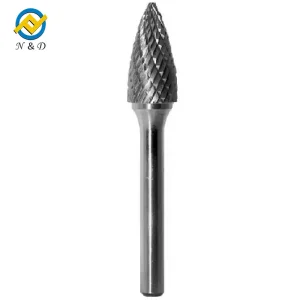
Features Type F tree shape profiles. Excellent for machining deep structural cavities and accessing tricky undercuts in complex cast parts.
Request Quote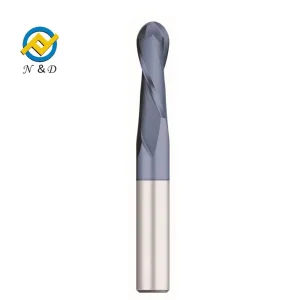
Delivers exceptional surface finishes during complex 3D profiling. Engineered with uniform radius tolerances to ensure high precision.
Get Bulk Pricelist
Pointed tree-shape profile G shape, ideal for chamfering edges and finishing narrow pockets. Direct factory-outlet distribution.
Get Factory Prices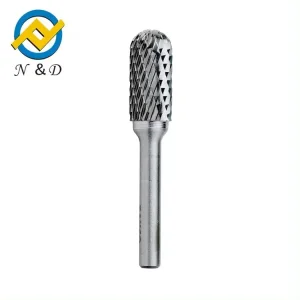
Combines cylindrical cutting stability with ball-nosed corner safety. Essential for machining inside deep casting slots.
Request Sizing Guide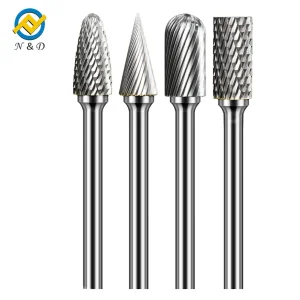
Engineered for high tool life under standard manual pressure. High durability and minimal chip clogging across steel alloys.
Download Spec Sheet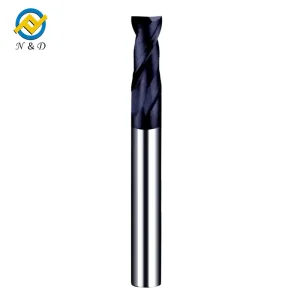
Optimized 2-flute slotting geometry providing high rigidity and chip control. Tailored for heavy slots in molds.
Request Factory Quote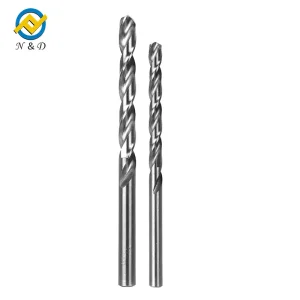
High-grade solid carbide structural layout providing structural hardness and perfect positional alignment, preventing drill walk in automated industrial CNC lines.
Contact Engineering Sourcing N&D Carbide