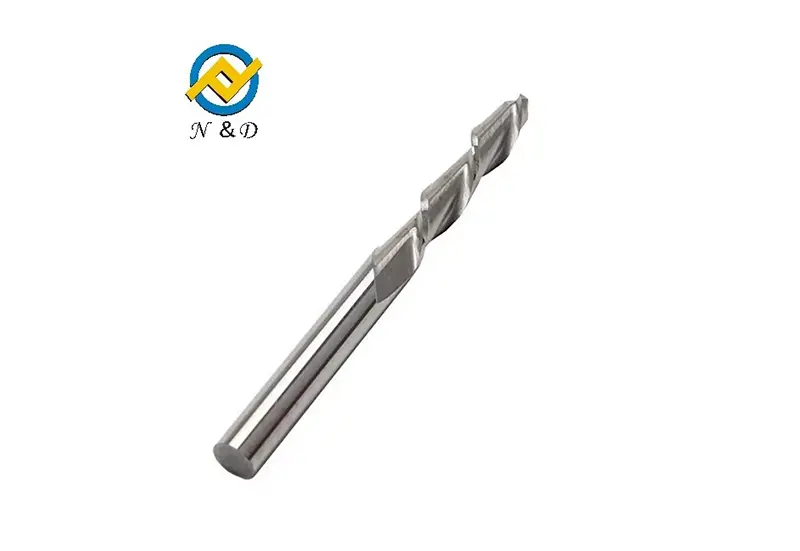
Explore our top-selling industrial standard custom-engineered CNC tooling series. Designed for long service life and high metal removal rates.
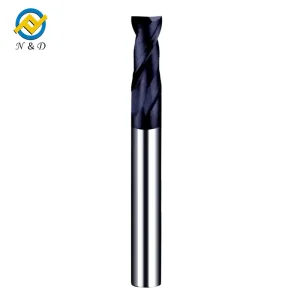
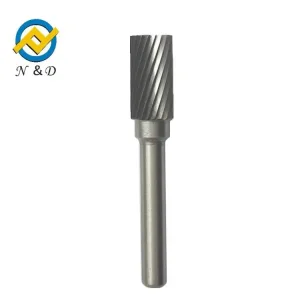
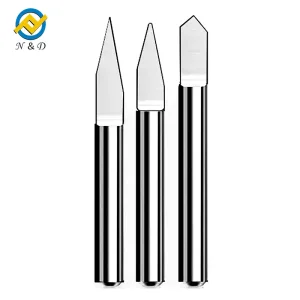
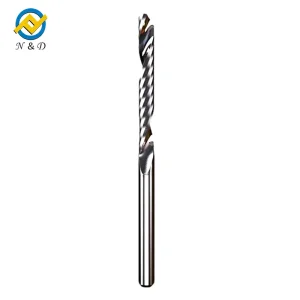
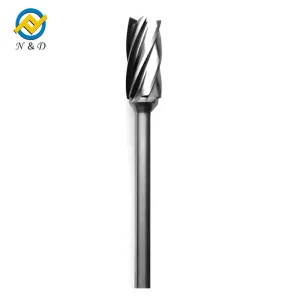
Optimizing rigid mechanical configurations, anti-harmonic tool paths, and advanced metallurgical characteristics to maximize tool life in deep pocket high-feed operations.
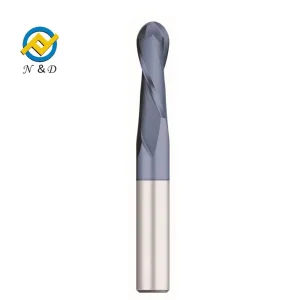
In high-performance multi-axis machining, specifying tool substrates, coating matrices, and cutting edge design rules becomes critical as workpiece hardness increases. Large diameter ball end mills (typically defining diameters from Ø12mm up to Ø32mm and larger) form the backbone of industrial complex surface roughing and structural component semi-finishing. Unlike smaller diameter milling cutters, large tools face intense mechanical vibration, harmonic resonance, extreme heat localization, and significant torque loads. Achieving sub-micron component surface finishes demands a comprehensive engineering approach to tool geometry, substrate composition, and toolholder coupling.
Engineered with a raw micrograin structure (0.4μm - 0.6μm grain size) featuring balanced 10% - 12% Cobalt binder content. This ensures maximum crack propagation resistance under dynamic torque loads while preserving an extremely sharp cutting boundary.
By applying unequal index spacing (e.g., 35° / 38° variable helix angles), our design disrupts harmonic amplification patterns during deep radial engagement. This eliminates chatter marks and extends spindle bearing lifetimes.
Advanced multilayers of AlTiN, AlCrN, or silicon-doped nACo coatings enable extreme thermal barrier properties. The surface threshold maintains structural hardness up to 1,100°C oxidation limits, enabling high MQL or dry milling.
When profiling contours using 3-axis and 5-axis strategies, the contact point on a ball end mill shifts from the center tip (where cutting velocity mathematically drops to zero) up to the outer peripheral diameter. Machining at the absolute center tip induces rubbing rather than shearing, resulting in thermal buildup and premature micro-chipping.
Our technical research focuses heavily on micro-gash geometries. By optimizing center-gash clearances, our factories produce ball nose geometries that maintain positive cutting angles closer to the axial centerline. This engineering breakthrough ensures efficient chip evacuating dynamics even when milling deep vertical cavities or steep vertical draft angles.
Translating advanced tool geometries into scalable process efficiencies across specialized heavy industries worldwide.
Milling monolithic airframe structures out of Titanium (Ti-6Al-4V) or Nickel-based superalloys (Inconel 718) requires extreme tool rigidity. Large diameter ball end mills provide the necessary stability to resist severe deflections.
High-volume die casting molds demand outstanding surface finish (Ra < 0.4μm) to minimize manual polishing times. Our ball end mills yield extremely predictable machining passes in hardened tool steels.
Machining hydro-turbine blades and large maritime propeller nodes involves removing tons of stainless steel and alloy castings, demanding extreme physical cutting volume without tool fracture.
Compare physical characteristics and optimized workpiece applications for each of our premium solid tungsten carbide grades.
| Carbide Grade Designation | Grain Size (μm) | Cobalt Content (%) | Hardness (HV30) | Transverse Rupture Strength (TRS - MPa) | Primary Industrial Applications |
|---|---|---|---|---|---|
| ND-Ultra-04 | 0.4 μm (Ultra-Fine) | 12% Co | 1,720 HV | 4,200 MPa | Hardened Die Steel >62 HRC, Stainless Alloys, Inconel milling |
| ND-Micro-06 | 0.6 μm (Submicron) | 10% Co | 1,600 HV | 3,800 MPa | General steel structural parts, Cast Iron roughing, High-Feed profiling |
| ND-Alu-08 | 0.8 μm (Fine) | 8% Co | 1,520 HV | 3,500 MPa | Non-ferrous milling, Alum-Lithium structural parts, composites |
| ND-Tough-10 | 1.0 μm (Standard) | 15% Co | 1,350 HV | 4,500 MPa | High impact interrupted cuts, heavy profile roughing under poor rigidity |
Founded in 2004, our company is a leading manufacturer of tungsten carbide products, specializing in the production of high-quality carbide materials. Headquartered in Guanghan, Sichuan Province, China, we have developed a highly optimized Factory 4.0 production infrastructure to support strict global delivery demands.
Through our continuous investment in industrial automation and precision tooling lines, we operate high-end, 5-axis CNC grinding machines (including ANCA, Walter, and Rollomatic equipment). With 120+ dedicated professionals, our advanced facility ensures that every batch of large diameter ball end mills maintains strict geometric consistency, allowing us to serve clients across 60+ countries globally.


From raw tungsten carbide mineral powder mixing to multi-axis coordinate tooth inspection, ensuring exceptional performance.
 1
1
Mix premium tungsten carbide powder, active cobalt binders, specialized rare refractory metals, aviation gasoline, and carbide alloy balls within highly protective rotating ball milling systems.
 2
2
Apply spray drying to evaporate the aviation gasoline carrier, add targeted natural ginseng gum binders, and sieve the homogeneous granulate under absolute humidity control.
 3
3
Utilize precision tungsten carbide tooling dies within automatic hydraulic systems to compress raw powder mixtures, forming solid structural green bodies.
 4
4
Subject compressed carbide blanks to Overpressure Sintering (HIP) up to 1450°C. This eliminates microscopic pores, ensuring near-theoretical metal density.
 5
5
Employ advanced 5-axis CNC grinding machines (ANCA/Walter) with premium diamond grinding wheels to generate the cutting flute profiles, variable helixes, and precise ball nose radiuses.
 6
6
Every finished large diameter tool undergoes optical coordinate scanner runs to check radial runout, core concentricity, and flank parameters before distribution.
Adapting tool design to meet the demands of tomorrow's ultra-high-speed, automated dry-cutting environments.
High-Power Impulse Magnetron Sputtering (HiPIMS) is replacing traditional Arc Ion Plating. This generates dense coating structures with smoother surfaces, significantly lowering friction coefficients and preventing workpiece sticking.
We are extending internal coolant channels directly through the core of large diameter ball end mills. Forcing coolant or compressed air directly to the cutting zone dramatically improves chip flushing in deep pockets.
We are committed to introducing tungsten scrap circularity programs. By offering carbon-neutral raw material recycling schemes, we help global manufacturing clients reduce corporate environmental footprints.
From raw carbide formulations to personalized engineering support, we optimize your production efficiency.
As a comprehensive OEM & ODM solutions provider, we engineer customized tool lengths, neck recesses, coating variations, and chip breaker configurations tailored to your exact manufacturing setups.
Our high-hardness substrates provide superb resistance to abrasive wear and high thermal expansion. This ensures consistent tolerances across long production shifts.
Maximize your metal removal rates (MRR) while minimizing machining downtime. Our tools are optimized for high-feed roughing and precise contouring.
We offer responsive technical integration guidance. From custom CAD designs to recommended feed and speed parameters, our application team supports your operations.
Stay informed with updates from our engineering department regarding tungsten carbide production and milling innovations.
With rising raw material demands globally, integrating environmentally friendly circular programs is vital. Our research details how we reduce carbon emissions while maintaining structural purity.
Modern tooling demands higher hardness alongside robust fracture toughness. We explore how balancing cobalt dispersion and grain refinement helps combat common chipping modes.
Introducing specialized structural modifications to high-performance twist drills. Discover how optimized core transitions prevent fracture hazards during deep-hole metalworking.
Deep technical answers addressing practical milling strategies, material characteristics, and tool maintenance guidelines.
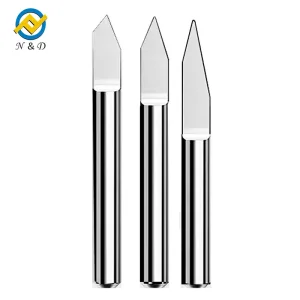
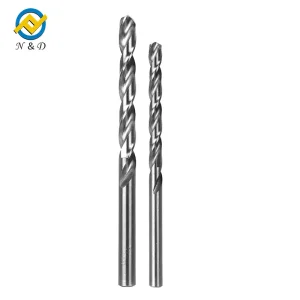
High-precision micro-grain cutting tools, engraving bits, and twist drills engineered to industrial production specifications.
 N&D Carbide