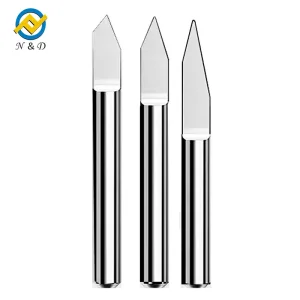
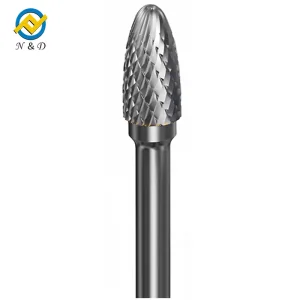
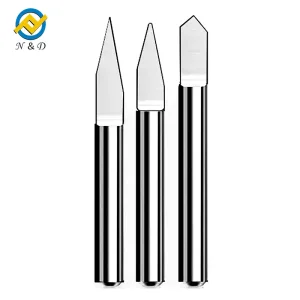
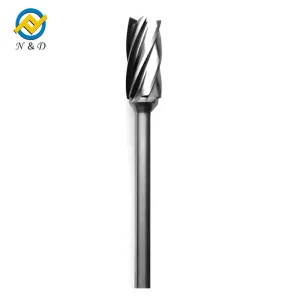
Explore our foundational range of ultra-precision cutting tools, manufactured utilizing state-of-the-art submicron tungsten carbide grain matrices and advanced 5-axis gear grind paths.
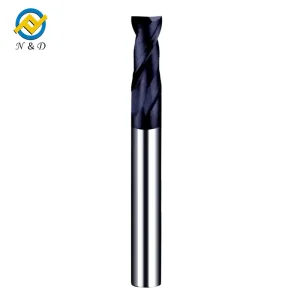
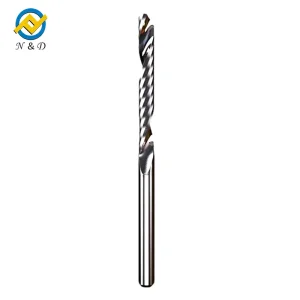
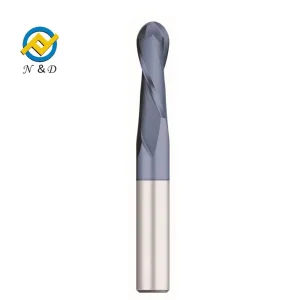
In modern precision milling, the deployment of Extra Long Ball Nose End Mills introduces a severe mechanical challenge: tool deflection. According to basic beam-bending theory, tool deflection (Y) varies proportionally to the cube of the overhang length (L³) and inversely to the fourth power of the core diameter (D⁴). This mathematical relationship ($Y \propto L^3 / D^4$) demonstrates that even minor increases in flute length exponentially amplify the risk of harmonic chatter, dimensional instability, and sudden catastrophic fracture.
Reducing tool deflection requires the use of carbide matrices engineered with a high Modulus of Elasticity (Young's Modulus $E \ge 600 \text{ GPa}$) combined with variable helix geometries that break up harmonic frequencies during deep cavity carving.
To mitigate these phenomena, world-class manufacturers implement specific design features:
Comparing physical properties across different tungsten carbide grades utilized in the manufacturing of extra-long tooling systems.
| Substrate Classification | Cobalt Content (wt%) | Grain Size (μm) | Hardness (HV30) | TRS (MPa) | Optimized Applications |
|---|---|---|---|---|---|
| Ultra-Micro Grain (Premium) | 10 - 12% | 0.2 - 0.4 | 1750 - 1900 | 4000 - 4500 | Hardened Tool Steels (>55 HRC), Aerospace Alloys |
| Submicron Grain (Standard) | 8 - 10% | 0.5 - 0.7 | 1600 - 1720 | 3500 - 3800 | General Steels, Aluminum Die Casts, Copper Alloys |
| Micro Grain (Economical) | 6 - 8% | 0.8 - 1.0 | 1450 - 1580 | 3000 - 3300 | Cast Iron, Roughing Operations under stable setups |
The manufacturing of advanced tooling like the Tungsten Carbide Ball Nose End Mill requires absolute raw material control. Chinese factories, particularly those situated in established industrial corridors such as Sichuan and Hunan, leverage unique access to domestic high-purity ammonium paratungstate (APT) refineries. This localized supply chain insulates global buyers from global resource supply shocks, maintaining stable pricing and predictable delivery timelines even in turbulent markets.
At our high-tech manufacturing center, established in 2004, vertical integration guarantees that we control every phase of manufacturing—from raw material wet grinding to the final multi-layer PVD coating application:
This continuous processing workflow prevents oxidation and micro-contamination of the tungsten grains, achieving a degree of substrate structural homogeneity that directly correlates with longer tool life. By employing Swiss Rollomatic and German Walter five-axis grinding systems, our automated machining lines guarantee runout limits within <0.003 mm, establishing an outstanding benchmark for repeatable quality in automated batch manufacturing.
How we engineer raw powder into highly specialized structural geometries under clean-room conditions.
Tungsten carbide, cobalt, and rare metal additives are milled in aviation gasoline to form a completely homogeneous slurry, which is subsequently spray-dried into micro-spherical powder.
Applying uniform multidirectional pressure to shape powder into high-density blanks, preventing internal voids or crystalline boundary defects prior to high-temperature sintering.
Blanks are heated to 1450°C under high-pressure argon gas. This removes micro-porosity, increasing density close to theoretical limits to maximize transverse rupture strength.
Advanced five-axis CNC machines cut flutes and profile the high-precision ball nose geometry, maintaining submicron tolerances on the radius and primary relief angles.
Using Physical Vapor Deposition, we apply ultra-thin layers of AlTiN or TiAlSiN (nACo) to provide the tool with incredible thermal barrier protection up to 1100°C.
Every single mill is audited using non-contact Zoller Genius laser metrology to verify outer diameter limits, concentricity, helix angles, and absolute runout tolerances.
Extra-long end mills are not general-purpose cutters; they are specialized problem solvers. In high-value manufacturing, these tools are deployed in precise, demanding application environments:
As industry transitions towards "smart manufacturing," the design of cutting tools must keep pace. The technical roadmap for Extra-Long Ball Nose Mills focuses heavily on:
1. Cryogenic Cooling Integration: Developing specialized internal coolant channels that deliver supercooled liquid nitrogen or CO2 directly to the cutting zone, suppressing heat generation during titanium machining.
2. Additive-Subtractive Hybrid Manufacturing: Using laser-based 3D printing to create lightweight tool bodies with internal honeycomb dampening structures that absorb high-frequency chatter.
3. Smart Tool Wear Prediction: Laser-etched QR codes and integrated micro-sensors that pair with modern smart machine spindles to dynamically calculate real-time tool life and prevent sudden breaking.
An updated commercial guide for purchasing teams. Standard values based on high-grade AlTiN coated Ultra-Micro Grain Carbide substrates.
| Model Code | Ball Radius ($R$) | Shank Diameter ($d$) | Flute Length ($l$) | Overall Length ($L$) | FOB Price (50-200 pcs) | FOB Price (>500 pcs) | Lead Time (Std) |
|---|---|---|---|---|---|---|---|
| EL-BN-R1.0-D4-L75 | 1.0 mm | 4.0 mm | 4.0 mm | 75 mm | $8.50 | $6.80 | 5 - 7 Days |
| EL-BN-R2.0-D6-L100 | 2.0 mm | 6.0 mm | 8.0 mm | 100 mm | $12.20 | $9.80 | 5 - 7 Days |
| EL-BN-R3.0-D6-L150 | 3.0 mm | 6.0 mm | 12.0 mm | 150 mm | $18.50 | $14.80 | 7 - 10 Days |
| EL-BN-R4.0-D8-L150 | 4.0 mm | 8.0 mm | 16.0 mm | 150 mm | $24.00 | $19.20 | 7 - 10 Days |
| EL-BN-R5.0-D10-L200 | 5.0 mm | 10.0 mm | 20.0 mm | 200 mm | $39.50 | $31.60 | 10 - 12 Days |
| EL-BN-R6.0-D12-L200 | 6.0 mm | 12.0 mm | 24.0 mm | 200 mm | $48.00 | $38.40 | 10 - 12 Days |
We offer comprehensive custom diameter engineering (e.g., custom tapered neck lengths, ball radii to custom micron tolerances, and application-specific coatings like Diamond-Like Carbon for aluminum, or Silicon-doped nanocomposite PVD coatings for hard milling). Contact our technical office to receive custom drawings within 24 hours.
Operating globally requires more than delivering high-quality tools; it calls for localized technical support and strong regulatory compliance. With tools actively processing metal in over 60 countries across North America, the European Union, and Southeast Asia, our factory works in close collaboration with certified local distributors and tool-regrinding centers.
Our comprehensive post-sale support infrastructure includes:
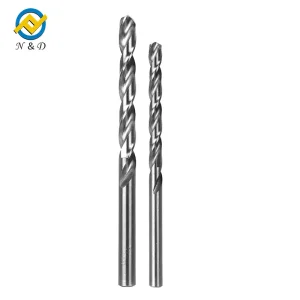
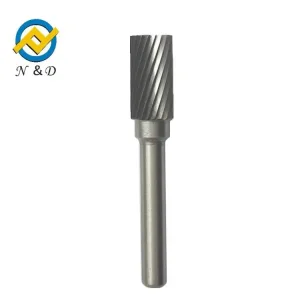
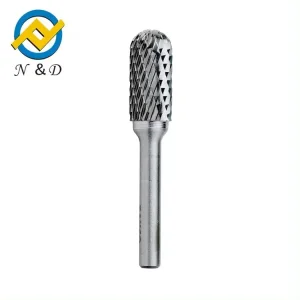
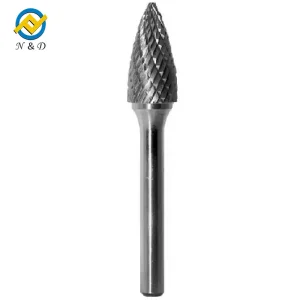
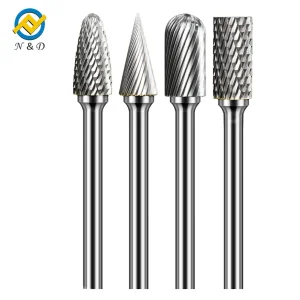
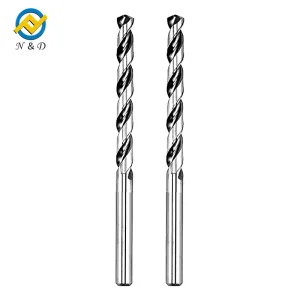
Browse our specialized selection of heavy-duty industrial burrs, high-performance cobalt twist drills, and flat-bottom engraving tools.
Direct answers from our laboratory engineers concerning speeds, feeds, tool life optimization, and troubleshooting tool failures.
 N&D Carbide