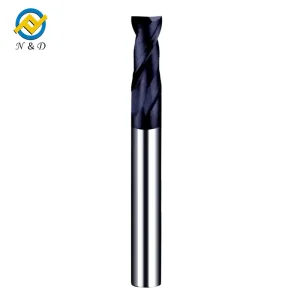
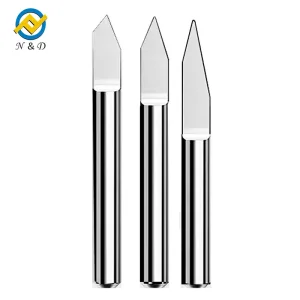
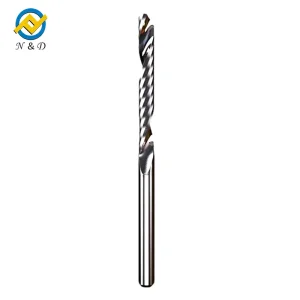
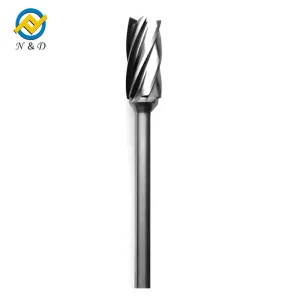
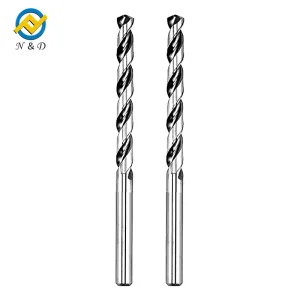
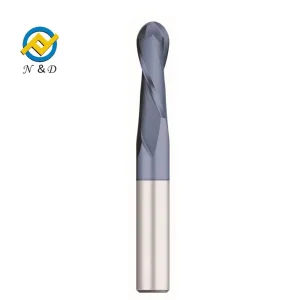
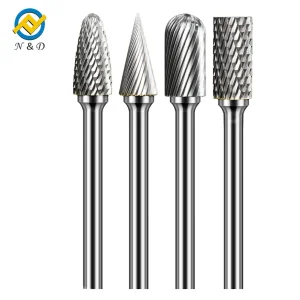
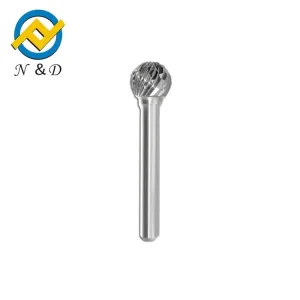
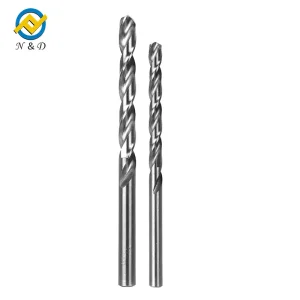
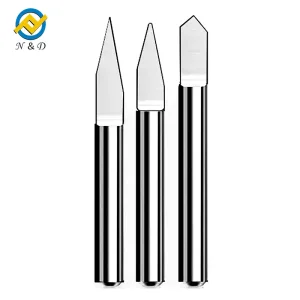
In the modern landscape of CNC machining, the Center Cutting End Mill represents a critical evolution in tool geometry. Unlike non-center cutting tools, these mills possess cutting edges that extend to the center of the tool, allowing for plunge cutting and ramping operations. This capability is the backbone of efficient material removal in industries ranging from aerospace to mold and die manufacturing.
The global industrial shift has positioned China as the premier hub for tungsten carbide manufacturing. Through agglomerated industrial clusters, manufacturers have achieved vertical integration—from raw material refinement to precision grinding using 5-axis CNC machines. This efficiency translates into:
Procurement managers in 2024 and beyond are prioritizing Information Gain. They are moving beyond simple price comparison, looking instead for technical documentation, material specification sheets, and proven application performance metrics. Manufacturers that provide clear data on "Mean Time Between Tool Failures" (MTBF) and thermal stability are gaining significant competitive advantage.
Whether it is the aerospace sector requiring extreme tolerance in titanium milling, or the automotive industry demanding high-volume steel finishing, the center cutting end mill must be tailored. Our factory expertise ensures that rake angles, helix angles, and carbide grades are optimized for the specific material hardness (HRC) encountered in the field.
Q: What makes center cutting end mills different from standard mills?
A: Center cutting mills can plunge vertically into the workpiece, whereas non-center cutting mills require a pre-drilled hole or a ramping angle to enter the material.
Q: How do you ensure the quality of tungsten carbide products?
A: We utilize advanced spectral analysis for raw materials, rigorous 5-axis CNC grinding, and final optical inspection for geometry tolerance.
Q: Do you support OEM/ODM for specific tool geometries?
A: Yes, our R&D team specializes in custom tool design to meet specific manufacturing challenges, providing quotes based on complexity and volume.
 N&D Carbide