Explore our engineering breakthroughs in high-density sub-micron solid tungsten carbide tooling solutions.
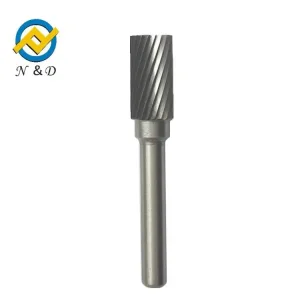
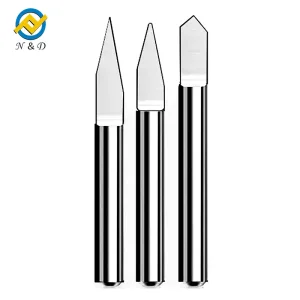
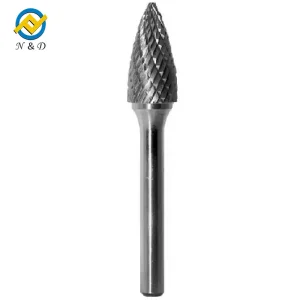
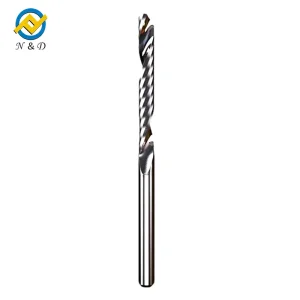
In the rapidly evolving landscape of advanced engineering, micro-machining has emerged as the cornerstone of technical progress. Industry verticals including aerospace defense, micro-medical device manufacturing, semiconductor fabrication, and consumer micro-electronics demand dimensional tolerances measured in single-digit microns. Central to fulfilling these challenging tolerances is the performance of Carbide Micro End Mills.
As micro-machining scales down below 1.0mm in cutting tool diameter, classical mechanics of metal cutting shift significantly. At sub-millimeter scales, conventional metal-removal logic breaks down due to micro-structural variations in the workpiece material. Factors such as tool stiffness, cutting edge radius (which often approaches or exceeds the uncut chip thickness), and carbide grain size density dictate machining outcome quality. Under these conditions, standard grades of tool materials fail, making it highly essential to utilize optimized sub-micron to nano-grain tungsten carbide (WC-Co) formulations.
Tungsten carbide's outstanding compressive strength, hardness, and thermal resistance make it the only logical substrate for high-performance micro end mills. As a premier micro tooling manufacturer, our scientific approach integrates sophisticated metallurgy with precision tool-path geometries to offer cutting-edge micro end mills that sustain prolonged tool life and guarantee geometric consistency in CNC micro-milling.
"In micro end milling (diameters below 0.5 mm), the ratio of the cutting edge radius to the feed per tooth is highly critical. A slightly blunt cutting edge results in plowing instead of shearing, which increases heat and triggers rapid tool failure. Our micro tooling designs focus on maintaining cutting-edge sharpness while maximizing structural rigidity to eliminate runout."
For global procurement executives across North America, Europe, and Asia-Pacific, selecting a cutting tool vendor extends beyond looking at a simple price list. Enterprise buyers prioritize risk mitigation, supply-chain resilience, and total cost of ownership (TCO) optimization.
Within mass production lines, a single unexpected tool failure can stop an entire assembly process, costing thousands of dollars per minute. Therefore, the primary procurement requirement is tool life predictability. Procurement leaders seek manufacturers that supply micro end mills capable of performing consistently over thousands of cycles with minimal tool wear, enabling scheduled tool replacements rather than dealing with catastrophic unexpected failures.
Additionally, the rise in automated CNC manufacturing has driven demand for high-volume custom tooling solutions. OEMs require partners who can rapidly customize tool geometry—such as adjusting flute lengths, back-tapers, relief angles, or applying highly specialized multi-layer physical vapor deposition (PVD) coatings—and scale production from prototype testing to industrial volumes without sacrificing quality.
To address the demanding micro-scale fabrication needs of modern industries, we provide structured material-specific solutions:
Machining complex biomedical alloys like Grade 5 Titanium and PEEK requires biocompatible, sharp cutting tools. Our customized micro end mills ensure burr-free finishing, eliminating costly manual post-processing.
Milling intricate copper and graphite electrodes for EDM molds demands ultra-tight tolerances. Our specialized diamond-like carbon (DLC) coated micro end mills prevent material adhesion and maintain sharp cutting edges.
Cutting tough materials like Inconel 718 and cobalt-chromium requires heat-resistant tools. We feature custom-engineered micro mills with specialized AlTiN / TiSiN coatings to withstand extreme temperatures and reduce oxidation.
From fine metallurgy to micro-geometric verification, discover how we build extreme reliability into every cutting edge.
Our raw material process mixes sub-micron tungsten carbide powder with cobalt binder, specialized rare metals, and high-purity processing liquids in advanced milling chambers to produce uniform slurries.
The homogenized slurry undergoes specialized drying to remove processing agents, followed by dry granulating to yield uniform, flowable powder ready for compaction.
Using advanced multi-axial compaction systems, we press the granular powder into high-density green blanks, ensuring uniform density profiles that prevent distortion during sintering.
The compacted carbide blanks are sintered in high-temperature vacuum furnaces at over 1400°C under hot isostatic pressure (HIP) to eliminate micro-voids and secure maximum physical density.
Our facility uses precision Rollomatic and ANCA 5-axis CNC grinding machines to grind flutes, relief angles, and cutting edge radii with high geometric accuracy.
Every batch undergoes non-contact optical inspection with high-resolution Zoller Genius systems. We verify cutting-edge radius, flute symmetry, and concentricity down to single-micron tolerances.

Established in 2004, our company has grown from a specialized metallurgical workshop into a prominent manufacturer of high-precision tungsten carbide solutions. Headquartered in the industrial hub of Guanghan, Sichuan Province, China, we operate advanced fabrication and metrology facilities.
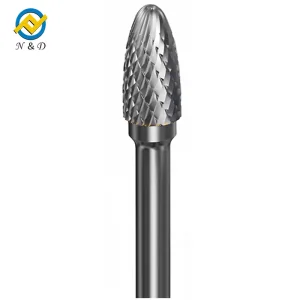
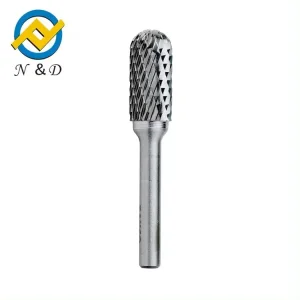
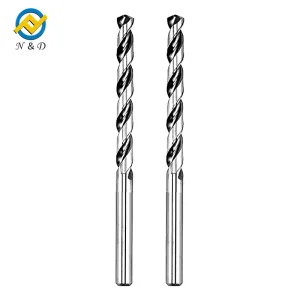
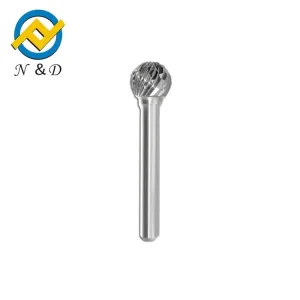
Over the past two decades, we have focused on developing advanced materials to meet the needs of diverse, high-performance industries. Our state-of-the-art facilities produce high-density tungsten carbide rotary burrs, solid carbide end mills, and custom high-speed steel (HSS) cobalt twist drills. With a dedicated team of over 120 skilled engineers and technicians, we manage all production stages in-house to ensure high dimensional accuracy and consistent tool life.
We export our specialized products to over 60 countries across North America, the European Union, and Southeast Asia. We support our customers with comprehensive OEM/ODM customization capabilities, reliable technical support, and strict compliance guarantees.
The future of micro machining is driven by technical advancements in material science and CNC automation. As machine tools incorporate active runout compensation and high-speed air-bearing spindles capable of exceeding 150,000 RPM, carbide tools must evolve to withstand these high mechanical stresses. Our engineering department is focused on three primary areas in our technical roadmap:
Serving high-tech industries worldwide requires strict adherence to international trade laws, customs clearance protocols, and rigorous quality standards. Our export framework is fully compliant with ISO 9001:2015 quality management systems, RoHS standards, and REACH environmental guidelines.
To support international buyers, we maintain a reliable global logistics network that provides express shipping, secure customs clearance, and DDP/CIF delivery options to help mitigate transport risks. Additionally, we provide comprehensive technical documentation—including material composition sheets, certificate of conformance (CoC) reports, and detailed tool parameters—with every shipment. This detailed support simplifies integration, eases incoming inspection, and streamlines procurement workflows for our global partners.
Expert insights on troubleshooting micro tool wear, optimizing CNC cutting data, and maximizing carbide performance.
Carbide grain size directly impacts the balance between wear resistance (hardness) and impact resistance (toughness). In micro end mills, using sub-micron or nano-grain tungsten carbide (grain size < 0.5 µm) increases hardness and preserves sharp, burr-free cutting edges. This fine grain structure also boosts transverse rupture strength, preventing micro-chipping under intermittent cutting loads.
Tool deflection and mechanical runout are the leading causes of micro-milling failures. Since the stiffness of a solid carbide end mill decreases exponentially with its diameter, even minor runout at the machine spindle (exceeding 2 µm) can subject the tool to uneven loading. This causes rapid tool wear, poor surface finish, or immediate breakage. Managing runout through high-quality tool holders and balanced spindles is essential for micro-tooling applications.
For high-temperature aerospace titanium alloys, high-performance physical vapor deposition (PVD) coatings like AlTiN (Aluminum Titanium Nitride) or silicon-doped TiSiN are highly recommended. These coatings create a protective aluminum oxide layer at elevated temperatures, maintaining surface hardness up to 900°C. For non-ferrous materials like copper or aluminum, thin, friction-reducing DLC (Diamond-Like Carbon) coatings help prevent chip welding and material build-up on the flutes.
Yes. We provide complete OEM/ODM customization services. Our advanced 5-axis CNC grinding systems allow us to modify flute geometry, adjust core thickness, customize relief angles, and apply targeted coatings to optimize performance for your specific machining requirements and workpiece materials.
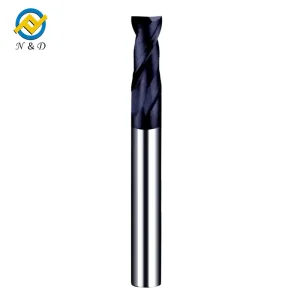
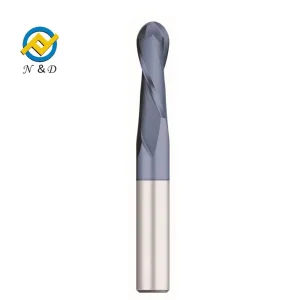
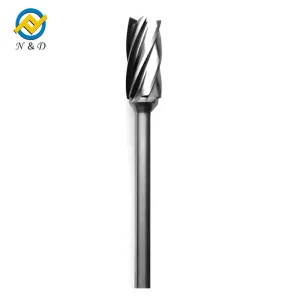
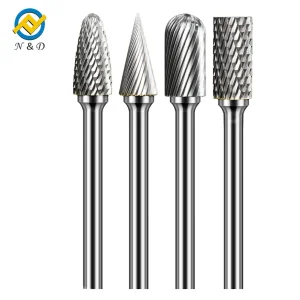
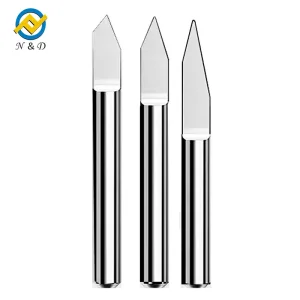
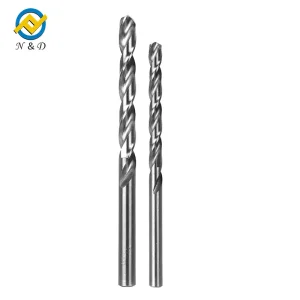
Complete your tooling library with our specialized end mills, drills, and engraving tools.
 N&D Carbide