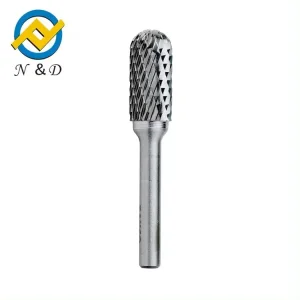
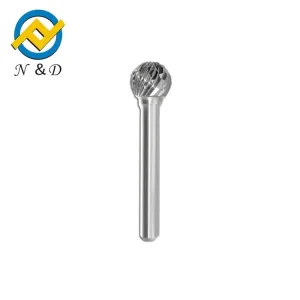
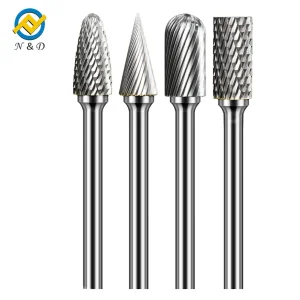
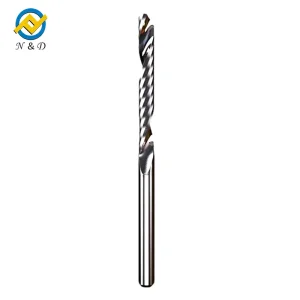
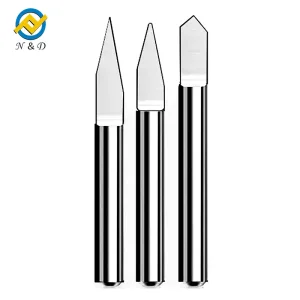
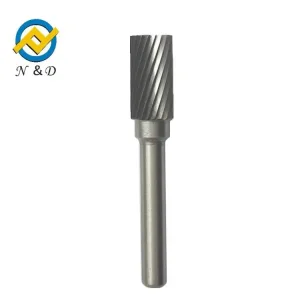
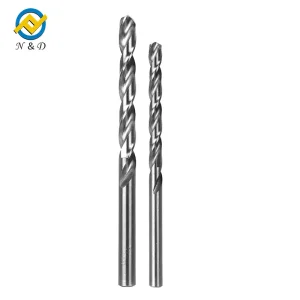
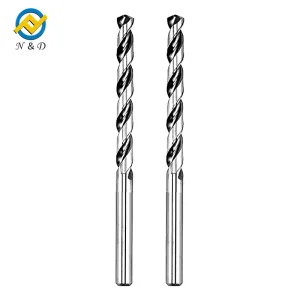
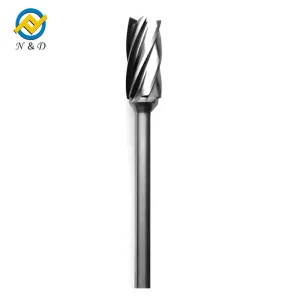
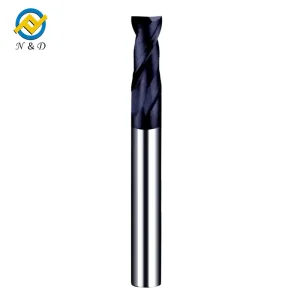
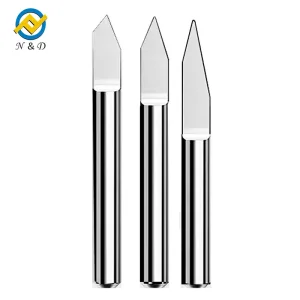
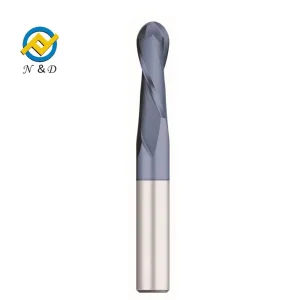
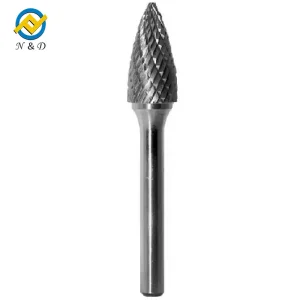
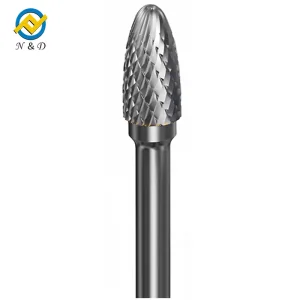
In the modern manufacturing landscape, the demand for precision woodworking has transcended simple carpentry. It now intersects with aerospace, high-end furniture design, and intricate architectural modeling. The choice of Custom Wood Cutting End Mills is no longer just a procurement decision; it is a fundamental factor in achieving zero-defect production and optimizing cost-per-part efficiency.
Utilizing ultra-fine grain tungsten carbide provides the fracture toughness required for the high-impact nature of wood cutting, where grain density varies significantly.
Single flute and multi-flute configurations are optimized for chip evacuation, preventing heat buildup that often leads to wood charring or tool deflection.
Designed to operate at RPMs exceeding 24,000, these tools maintain structural stability, ensuring a "mirror finish" directly from the CNC machine.
Since our establishment in 2004, the Chinese carbide tool industry, particularly in regions like Sichuan and Hunan, has transitioned from mass production to high-precision customized engineering. Our facility in Guanghan stands as a testament to this evolution.

Established Year
Expert Engineers
Global Markets
Happy Clients
Quality is not an accident; it is the result of a rigorous 6-step manufacturing process that ensures every bit meets aerospace-grade tolerances.

We combine high-grade tungsten carbide with cobalt and rare aviation-grade metals to create a substrate with superior heat resistance.

Blanks are sintered under intense pressure and temperature to eliminate porosity and maximize material density.

Using advanced CNC technology, we achieve intricate geometries and razor-sharp edges essential for wood cutting.
The global woodworking tool market is currently experiencing a shift toward sustainable manufacturing and automation. Large-scale enterprises in North America and Europe are increasingly seeking partners who can provide more than just tools—they need integrated solutions.
| Industry Segment | Tool Requirement | Macro Solution |
|---|---|---|
| Cabinetry & Furniture | Down-cut Spiral Mills | Reduced splintering on laminated surfaces. |
| Signage & Display | Single Flute O-Flutes | Optimized for plastic and soft-wood high-speed clearing. |
| Aerospace Wood Composites | Diamond Coated Burrs | Extended tool life in abrasive composite machining. |
Tungsten carbide offers 3x the hardness and significantly better heat resistance. In woodworking, where friction can quickly dull a blade, carbide maintains its edge 10-25 times longer than HSS, reducing downtime and sharpening costs.
For wood, fewer flutes (1 or 2) are typically better for deep cuts and fast clearing because they allow for larger chip removal. Higher flute counts are reserved for finishing passes where small amounts of material are removed to achieve a smooth surface.
Yes. As a production-oriented factory, we provide tiered pricing based on volume and customization complexity. We also offer OEM services for private labeling and unique tool geometries tailored to specific industrial workflows.
Standard products are shipped within 3-7 days. For custom designs involving new geometries, the process typically takes 15-25 days from final drawing approval to shipment, including rigorous quality inspection.
 N&D Carbide