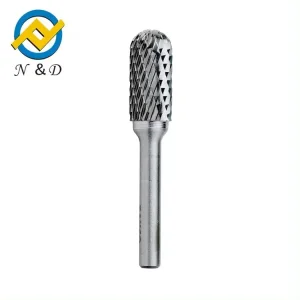
Ideal for precision engineering and intricate finishing.
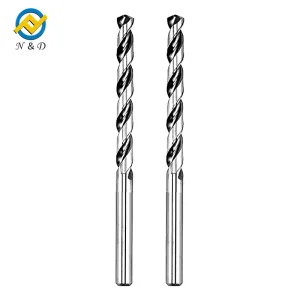
Superior performance for high-hardness metal drilling.
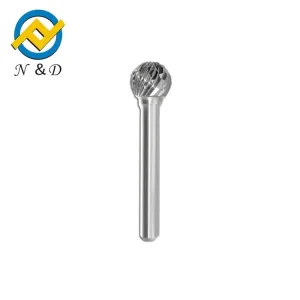
Designed for rapid material removal and spherical shaping.
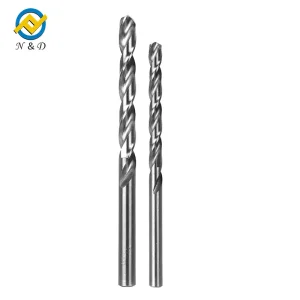
The ultimate solution for high-speed industrial drilling.
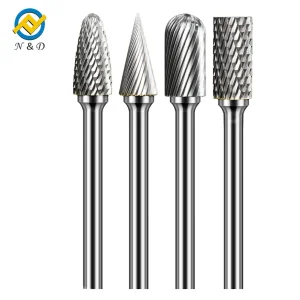
Optimized for precision cutting and heavy-duty machining.
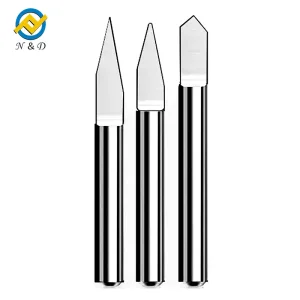
Specialized for micro-engraving and sharp edge retention.
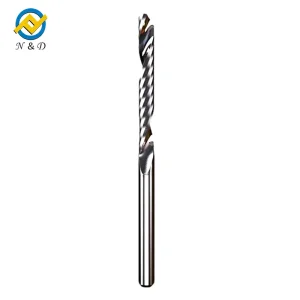
Perfect for aluminum and non-ferrous material processing.
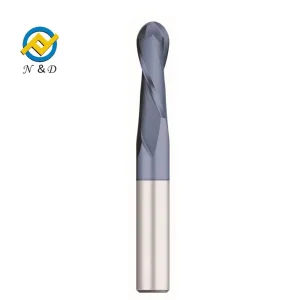
Advanced high-precious milling for 3D surfaces.
The global market for Tungsten Carbide Rotary Bits is currently undergoing a significant transformation, driven by the increasing demand for high-precision manufacturing in the aerospace, automotive, and defense sectors. As of 2024, the industry is valued at billions of dollars, with a compound annual growth rate (CAGR) exceeding 5.2%. Tungsten carbide, often referred to as "Industrial Teeth," remains the preferred material due to its hardness (second only to diamond) and exceptional thermal stability.
Major manufacturing hubs like Guanghan, Sichuan (China), Germany, and the United States are leading the charge in R&D. The focus has shifted from simple deburring to complex surface finishing. In the current economic climate, manufacturers are prioritizing Information Gain—using data-driven insights to optimize tool life and reduce machine downtime. The rise of Electric Vehicles (EVs) has specifically increased the demand for specialized bits that can handle high-strength alloys and composite materials used in battery housings and lightweight frames.
Supply Chain Evolution: We are seeing a move towards localized supply chains to mitigate global logistics risks. However, the core metallurgy—mixing tungsten powder with cobalt—remains a specialized craft. Our facility in Sichuan combines traditional metallurgical expertise with 5-axis CNC grinding technology to ensure that every rotary bit meets the "E-E-A-T" criteria: Experience in material selection, Expertise in geometry, Authority in manufacturing standards, and Trustworthiness in every quote provided.
Integration of rotary bits with robotic deburring arms is the leading trend. Tools must now feature consistent shanks and balanced heads to prevent vibration-induced failures in automated lines.
Development of ultra-fine grain carbide (sub-micron) allows for sharper edges and higher wear resistance, essential for medical and micro-electronic applications.
Recycling tungsten carbide is no longer optional. Modern factories are implementing "circular economy" models where used bits are re-melted into high-grade powder.
Looking toward 2030, the technical roadmap for Carbide Rotary Bits focuses on two main pillars: Geometric Complexity and Advanced Coating Science.
Historically, rotary burrs were available in standard cuts (Single, Double, Alu). Tomorrow’s bits will feature variable helix angles and unequal tooth spacing to eliminate resonance and improve chip evacuation. Furthermore, the application of PVD (Physical Vapor Deposition) coatings like AlTiN (Aluminum Titanium Nitride) and DLC (Diamond-Like Carbon) is becoming standard, extending tool life by up to 300% in high-heat environments.
In terms of future outlook, we anticipate the integration of "Smart Tooling." While a rotary bit is a static object, the data surrounding its performance in a CNC environment can be tracked. Our R&D team is currently exploring the synergy between tool geometry and specific alloy types, providing customers not just with a "pricelist," but with a comprehensive Machining Solution.
Average Hardness
Heat Resistance
Precision Tolerance
Extended Tool Life
Custom tree-shape and cylindrical ball-nose burrs are used for deburring jet engine fan blades. The requirement for zero thermal damage to the workpiece makes our high-cobalt grades indispensable.
In high-performance engine tuning, long-shank rotary bits are required for internal porting. Our custom quotes include balanced shanks to prevent chatter at 30,000 RPM.
Corrosion-resistant carbide grades are used for cleaning weld seams on underwater pipelines and heavy-duty valves in the North Sea and Gulf of Mexico.
Micro-burrs for orthopedic implants (Titanium) require ultra-smooth finishes. Our CNC-ground bits ensure bio-compatibility and high surface integrity.

Founded in 2004, our company is a leading manufacturer of tungsten carbide products, specializing in the production of high-quality carbide materials. Headquartered in Guanghan, Sichuan Province, China, we have become an industry leader, serving a wide range of industries including mining, construction, oil and gas, and manufacturing.
Our commitment to excellence and innovation allows us to expand our business and meet the needs of our customers around the world. As a company with 120+ dedicated employees, we pride ourselves on providing quality products that meet the diverse needs of our customers. Our team consists of experienced professionals who are well versed in the intricacies of tungsten carbide manufacturing, ensuring our products meet the highest standards of precision and durability.

Mixing tungsten carbide powder with cobalt and rare earth elements in aviation gasoline to ensure a molecularly consistent blend.

Our 200-ton hydraulic presses mold the powder into "green" blanks with precise density control.

Sintering in a High-Pressure Sintering furnace at 1450°C to eliminate micro-porosity, increasing transverse rupture strength.

Cutting the gear teeth using advanced ANCA or Walter CNC machines to ensure micron-level concentricity.
A: Single Cut is for heavy material removal on ferrous metals, while Double Cut (Cross Cut) produces smaller chips and a better finish, making it ideal for most general-purpose applications.
A: Price is determined by the carbide grade (K10-K40), shank diameter, complexity of the head geometry, and total order volume. We offer significant discounts for bulk OEM orders.
A: Yes, but we recommend our TiAlN-coated series for stainless steel to prevent work hardening and heat build-up.
A: Standard items are in stock. Custom geometries usually require 2-3 weeks for sintering and precision grinding.
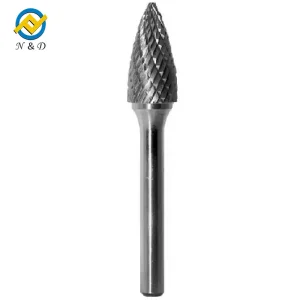
Factory outlet pricing for heavy-duty metal carving.
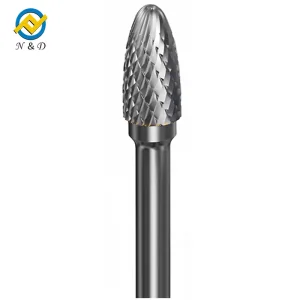
Custom sizes for rounded contour finishing.
High-quality quotes for industrial mold makers.
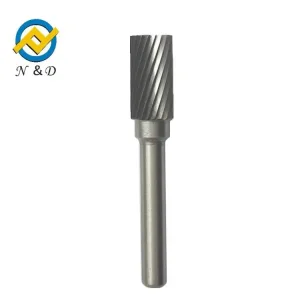
Standardized cylinder bits for flat surface deburring.
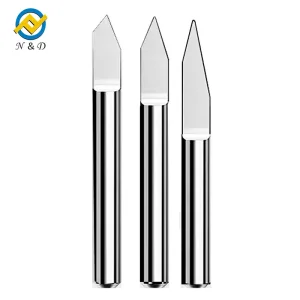
Precision tools for signage and detailed artwork.
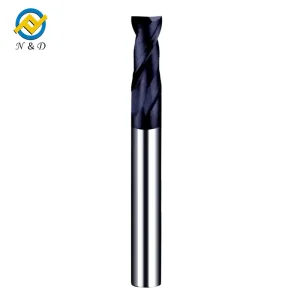
High-performance end mills for slotting and profiling.
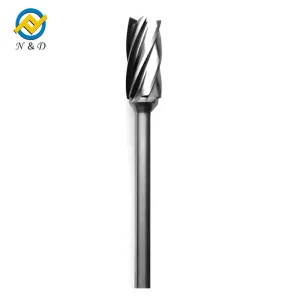
Specialized wide-flute design to prevent clogging in soft metals.
Tailored engineering solutions for specific industrial tasks.
Exploring the 2024 shift toward eco-friendly tungsten sourcing and the impact of recycled carbide on tool performance.
Published: 2024-09-29Addressing the challenges of global raw material price volatility and the opportunities in aerospace-grade alloying.
Published: 2024-09-29How the latest solid carbide drills are doubling feed rates in CNC operations compared to traditional HSS tools.
Published: 2024-09-29 N&D Carbide