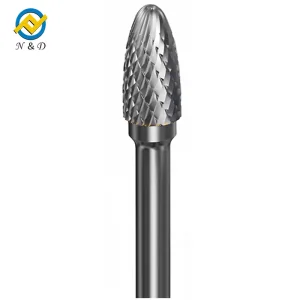
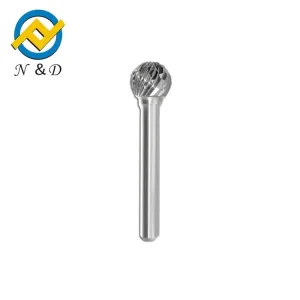
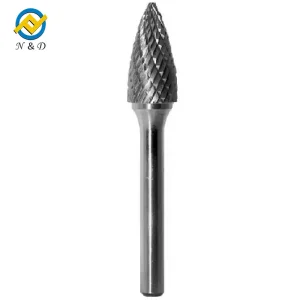
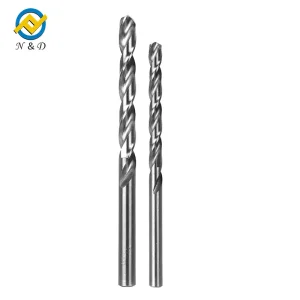
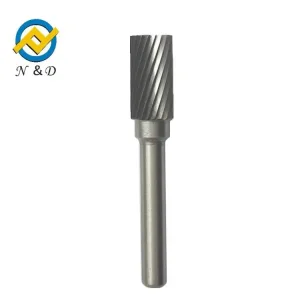
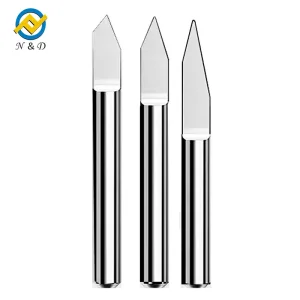
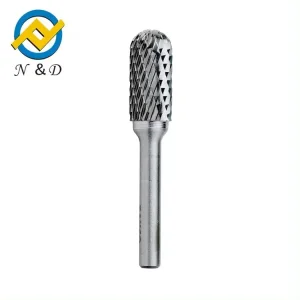
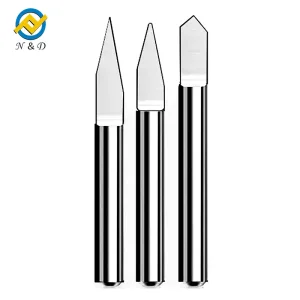
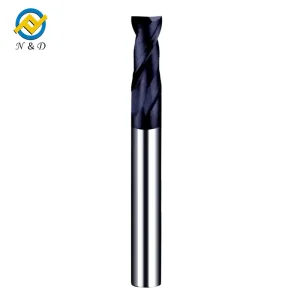
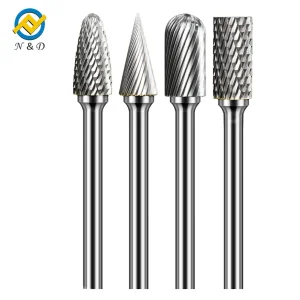
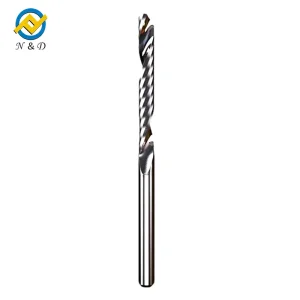
In the contemporary landscape of high-precision manufacturing, Tungsten Carbide End Mills represent the pinnacle of material science and mechanical engineering. As a leading manufacturer established in 2004, we have witnessed the transformation of industrial cutting from standard high-speed steel (HSS) to the sophisticated micro-grain cemented carbide structures used today. Our mission is to provide more than just tools; we provide the Information Gain necessary for our partners to optimize their production cycles, reduce tool wear, and achieve unprecedented surface finishes.
Global industrial demand is shifting toward materials that are harder to machine, such as Inconel, Titanium alloys, and hardened steels. This shift necessitates a customized approach to tool geometry, where the rake angle, flute count, and coating thickness are meticulously engineered for specific metal removal rates (MRR). By leveraging our 20 years of expertise, we offer bespoke solutions that address the macro challenges of the aerospace, medical, and automotive sectors.
Machining components for jet engines and structural airframe parts requires tools that can withstand extreme heat. Our custom end mills feature specialized heat-resistant PVD coatings, ensuring stability when cutting heat-resistant superalloys (HRSA).
For surgical instruments and orthopedic implants, precision is non-negotiable. We provide sub-micron grain carbide tools that deliver high-precision tolerances and mirror-like finishes to comply with stringent medical standards.
The transition to Electric Vehicles (EVs) involves high-speed machining of aluminum alloys and composites. Our single-flute and high-helix designs prevent chip clogging and maximize efficiency in high-volume production lines.
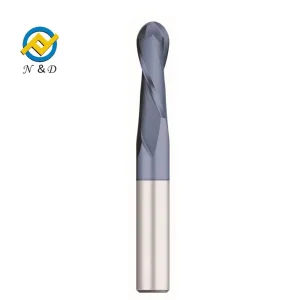
Hardened steel molds require tools with exceptional toughness. Our ball-nose and corner radius end mills are engineered for 3D profiling, providing consistent performance over long machining hours.
Miniaturization in electronics demands micro-end mills. We produce tools as small as 0.1mm with extreme concentricity to handle the delicate requirements of PCB and chip-carrier manufacturing.
From oil drilling components to wind turbine gears, our heavy-duty roughing end mills are designed to remove large volumes of material quickly while maintaining tool integrity.
Our production process in Guanghan, Sichuan, integrates the latest advancements in Powder Metallurgy. The performance of a Tungsten Carbide end mill is determined by its microstructure. We utilize a blend of Tungsten Carbide (WC) and Cobalt (Co) that is wet-ground and vacuum-sintered to eliminate porosity, resulting in a material with a hardness reaching up to HRA 92-94.
We use ultra-fine grain carbide (0.2μm - 0.5μm). Smaller grain sizes provide more edges for bonding, which significantly increases both hardness and transverse rupture strength (TRS).
Beyond the substrate, our tools are enhanced with AlTiN, TiSiN, or DLC (Diamond-Like Carbon) coatings. These coatings reduce friction and provide a thermal barrier that prevents the tool from softening at high temperatures.
Using state-of-the-art ANCA and Rollomatic 5-axis CNC machines, we ensure that every flute, relief angle, and land is ground to a tolerance of ±0.005mm.
The global tungsten carbide market is currently navigating complex supply chain dynamics. As a manufacturer with integrated production capabilities, we mitigate these risks by sourcing high-purity raw materials and maintaining robust inventory levels. We understand that our clients in Europe, North America, and Southeast Asia require more than just a product; they require Compliance and Reliability.
The future of milling is digital. We are currently developing "Smart Tools" equipped with unique identifiers (RFID or Laser-etched Matrix codes) that allow for tool-life tracking within an ERP system. By integrating AI-driven data into our manufacturing process, we are optimizing tool geometries based on real-world feedback from thousands of application scenarios. This "Digital Twin" approach to tool design will reduce prototyping time for custom orders by up to 40% in the coming years.
 N&D Carbide