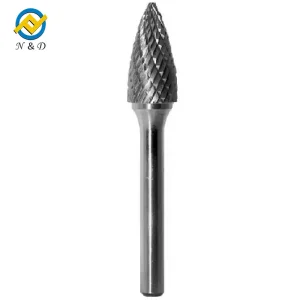
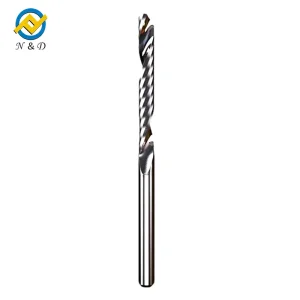
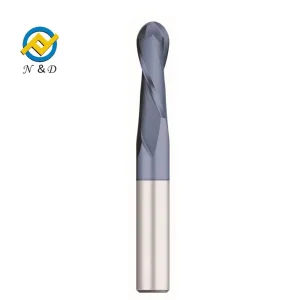
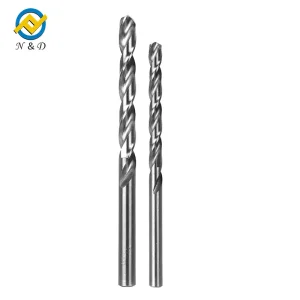
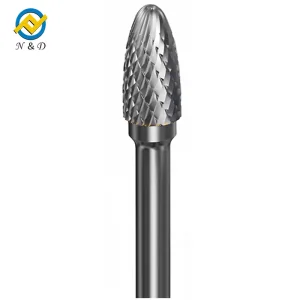
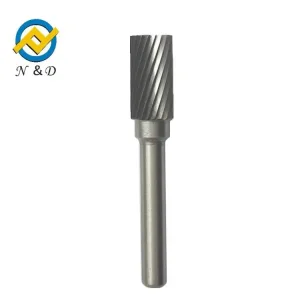
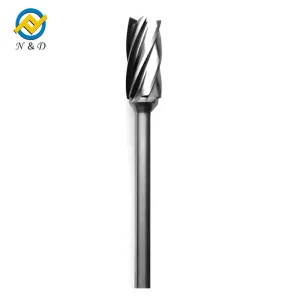
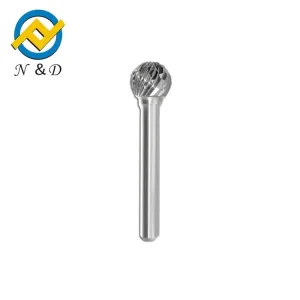
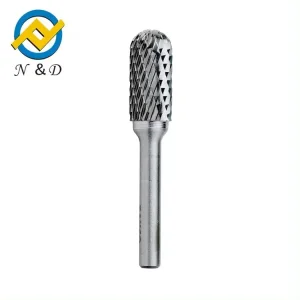
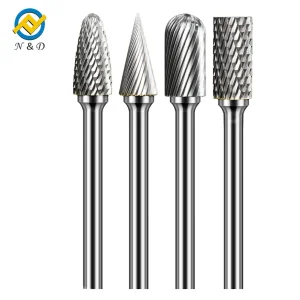
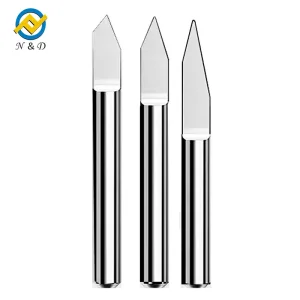
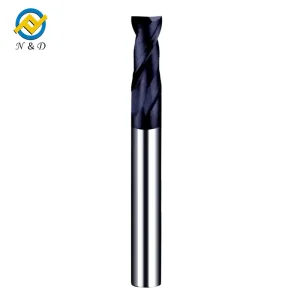
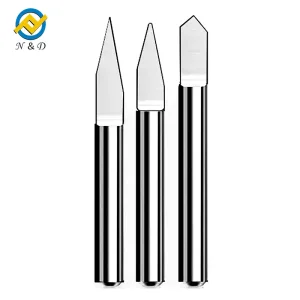
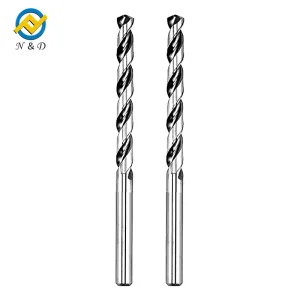
High-precision tungsten carbide and high-speed cobalt twist drills engineered for high-performance CNC operations and manufacturing environments.
In high-volume manufacturing, the efficiency of the initial machining stage—the roughing process—directly dictates the cycle time and overall throughput of the production line. A Custom Roughing Mill Cutter is a tool engineered explicitly to maximize the Metal Removal Rate (MRR). By utilizing knuckle-type cutting geometries or undulating wavy flutes, roughing cutters fragment chips into smaller, manageable segments, minimizing spindle load and reducing cutting forces by up to 30% compared to standard finishing end mills.
As an engineering manager or purchasing director, selecting the appropriate roughing mill cutter involves balancing tool geometry, substrate composition, and localized vendor support. Standard off-the-shelf cutters frequently struggle to meet the precise requirements of proprietary alloys, titanium components in aerospace, or hard-milling tool steels. This guide covers customization processes, structural parameters, localized compliance, and strategic procurement mechanisms from premier Chinese manufacturing hubs.
The durability of a roughing cutter depends on the metallurgical integrity of its substrate. We utilize sub-micron and nano-grain Tungsten Carbide (WC) matrices bound with Cobalt (Co) content varying between 6% and 12%, depending on the target workpiece hardness. For high-impact applications, such as roughing titanium or stainless steel, a higher cobalt content increases transverse rupture strength (TRS), preventing premature micro-chipping along the tool edges.
To withstand extreme cutting zone temperatures exceeding 900°C without mechanical failure, state-of-the-art PVD (Physical Vapor Deposition) coatings are applied:
Every roughing cutter undergoes a meticulous, closed-loop manufacturing pipeline to ensure structural and dimensional reliability.
Mix premium tungsten carbide, cobalt binders, rare metals, aviation gasoline, and alloy balls inside specialized ball mills to achieve a highly homogeneous powder slurry.
Ginseng gum organic binders are introduced to hold the green body shape before the mixture is dried, safely distilling and filtering out the aviation gasoline.
The dry, uniform tungsten carbide powder is consolidated into cylinder blanks using high-tonnage uniaxial or isostatic presses, ensuring consistent density.
Sintering occurs at temperatures up to 1450°C in a Hot Isostatic Pressing (HIP) furnace, achieving full density and removing microscopic void porosity.
Utilizing advanced 5-axis CNC grinding machines (such as ANCA or Walter), the flute geometry, knuckle profiles, and relief angles are precision-ground.
Perform 100% inspection using non-contact laser measurement systems to verify core parameters, tooth profiles, and micro-inch surface finishes.
Founded in 2004, our enterprise has grown into a leading manufacturer of tungsten carbide products, specializing in high-performance carbide cutting and grinding solutions. Headquartered in Guanghan, Sichuan Province, China, we operate state-of-the-art facilities serving critical industrial sectors globally, including aerospace, defense, automotive, mold making, and energy exploration.
Our facility houses over 120 dedicated employees, featuring engineering teams specializing in cutting-tool geometries and advanced materials. By investing in European multi-axis CNC grinding technology and automated inspection infrastructure, we deliver custom roughing tools designed to match specific machine spindles and cutting environments.
Why top industrial procurement managers leverage Sichuan's specialized tungsten carbide hubs for critical machining operations.
Guanghan, Sichuan, sits within a premier metallurgical manufacturing cluster. This provides immediate access to premium Ammonium Paratungstate (APT) raw materials and specialized heat-treatment utilities. The localized infrastructure reduces basic material costs and ensures stable production lines even during global market shifts.
We operate in accordance with ISO 9001:2015 standards, maintaining full traceability for every production batch. All carbide substrates are RoHS compliant and conform to REACH chemical safety standards, ensuring trouble-free integration into European and North American industrial supply chains.
Through a network of regional distributors and technical centers in North America and Western Europe, we offer local support, including tool reconditioning, custom edge-prep consultation, and regional inventory management. This balances cost efficiency with localized service accessibility.
Not all roughing processes are identical. A tool optimized for pocketing structural aircraft components from a solid block of AL7075 will fail when pocketing Titanium Grade 5 (Ti-6Al-4V). Custom tool configuration allows engineers to select the exact parameters required for their specific workpiece materials:
These materials work-harden quickly and generate high thermal loads at the cutting edge. Custom roughing tools utilize unequal index indexing and variable helix angles (typically 38°/41°) to break harmonic vibrations and prevent chatter. A thick, heat-resistant AlTiN coating is critical here to limit thermal diffusion into the tool body.
The priority here is chip evacuation. Custom roughing tools for aluminum feature highly polished 2 or 3-flute configurations, ultra-large chip pockets, and cylindrical land margins to maintain stability at rotational speeds up to 25,000 RPM.
Machining tool steel in its hardened state (above 50 HRC) requires a robust knuckle profile and a stable cutting edge. Utilizing a micro-grain WC matrix with high cobalt content provides the necessary resistance to impact and shock loading along the tool flutes.
Estimated pricing based on standard and high-performance custom configurations. Contact our sales department for volume discounts and detailed contract pricing.
| Nominal Diameter (mm) | Flutes | Substrate Material Grade | Coating System | Recommended Workpiece Material | FOB China Unit Price (USD) | Standard MOQ (Pcs) |
|---|---|---|---|---|---|---|
| d6.0 | 3 / 4 | Ultra Micro-Grain WC (10% Co) | AlTiN (PVD) | Carbon Steels, Die Steels (<45 HRC) | $4.80 - $6.50 | 100 |
| d8.0 | 3 / 4 | Ultra Micro-Grain WC (10% Co) | AlTiN (PVD) | Alloy Steels, Tool Steels | $7.20 - $9.80 | 100 |
| d10.0 | 4 | Super Micro-Grain WC (12% Co) | nACo Composite | Hardened Die Steel (Up to 55 HRC) | $12.50 - $16.00 | 50 |
| d12.0 | 4 / 5 | Super Micro-Grain WC (12% Co) | nACo Composite | Stainless Steels, Titanium Alloys | $18.00 - $24.50 | 50 |
| d16.0 | 4 / 5 | Nano-Grain WC (12% Co + Rare Metals) | TiAlN High-Temp PVD | Superalloys, Hardened Steel (<60 HRC) | $35.00 - $48.00 | 20 |
| d20.0 | 4 / 6 | Nano-Grain WC (12% Co + Rare Metals) | TiAlN High-Temp PVD | Hardened Tool Steel, Inconel | $58.00 - $78.00 | 10 |
*Note: The prices listed above serve as technical guide references. Custom modifications including custom shank flats (Weldon shanks), specific neck relief lengths, variable pitch configurations, and raw material index shifts will adjust unit cost.
Common questions from tool engineers regarding structural parameters, customization options, and tool life optimization.
High-durability cylindrical burrs, milling cutters, CNC engraving tools, and high-performance twist drills.
 N&D Carbide