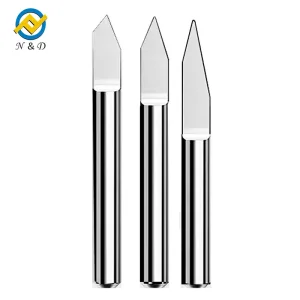
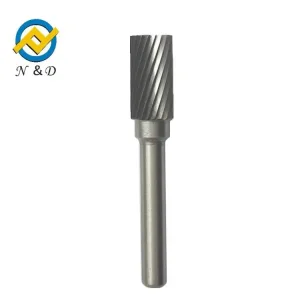
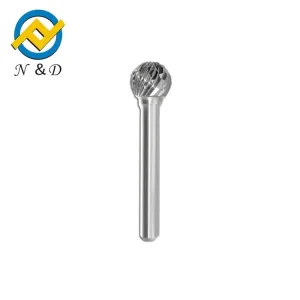
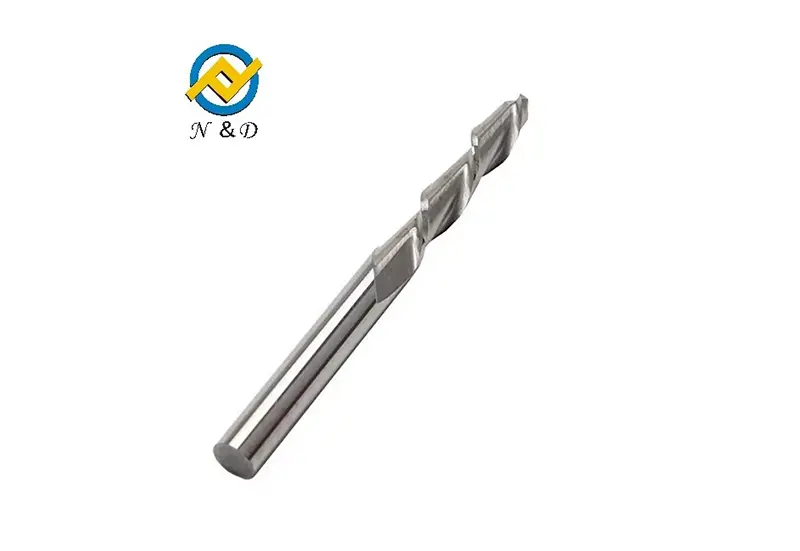
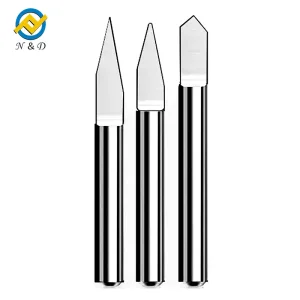
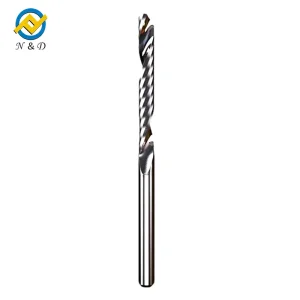
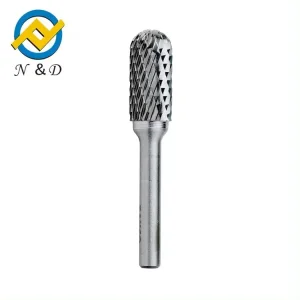
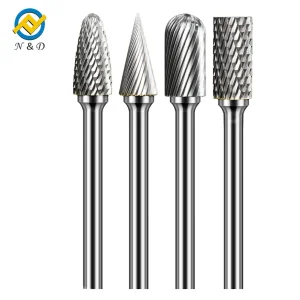
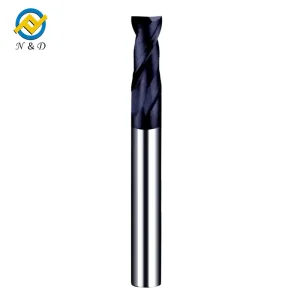
Explore our premium grade collection of tungsten carbide products engineered to exceed strict global micro-manufacturing tolerances.
Analyzing the shift towards extreme reach end mills in high-precision modern aerospace, defense, and automotive die manufacturing.
Modern manufacturing engineering is characterized by an continuous quest for lighter, stronger, and more integrated monolithic components. In industries such as aerospace structure fabrication, medical device integration, and deep-draw automotive mold stamping, components that once required complex multi-part mechanical assemblies are now machined directly from single, solid structural blocks. This evolution has triggered an unprecedented surge in demand for specialized custom extra-long reach carbide end mills.
Traditional milling tooling is severely limited when the aspect ratio (length-to-diameter ratio, L:D) exceeds 5:1. As reach increases, mechanical deflection increases exponentially (by the cube of the overhang length), leading to severe harmonic vibrations, surface finish deterioration, and premature cutting edge failure. To overcome these fundamental physics limitations, global manufacturers have advanced micro-grain substrate metallurgical formulations and pioneered variable helix fluting, resulting in tools capable of maintaining dynamic rigidity at ratios reaching 10:1, 15:1, or higher.

How ND Tungsten Carbide combines deep metallurgy and precision manufacturing to solve long-overhang vibrations.
At ND Tungsten Carbide, founded in 2004 in Guanghan, Sichuan Province, China, our engineered answers to the challenges of high-overhang machining are built upon two main pillars: advanced material science and custom-tailored geometries. Ordinary tooling grades fail rapidly when subjected to the prolonged thermal and cyclic mechanical fatigue common in deep cavity operations. Our solution utilizes a proprietary ultra-fine sub-micron tungsten carbide substrate characterized by an exceptionally uniform cobalt dispersion matrix.
This customized substrate provides a high modulus of elasticity, delivering structural rigidity up to 2.5 times higher than standard high-speed steels or general-purpose carbide rods. By reducing vibration at the chemical level, we enable machinists to execute deep-reach pocketing with confidence. Furthermore, our customized design process modifies the core diameter and implements tapered shanks to dynamically absorb vibration and prevent catastrophic tool breakage during operations in deep cavities.

Every long-reach tool goes through our strict processing line, ensuring flawless dimensions and structural reliability.
We blend virgin tungsten carbide powder, cobalt, rare metal additives, aviation gasoline, and premium alloy balls inside automated milling drums to ensure a highly homogenous micro-grain slurry.
The wet powder undergoes drying processes with ginseng gum, filtering out the aviation gasoline completely under temperature-controlled safety environments.
Our high-pressure powder molding machinery consolidates the loose composite powder into solid cylindrical blanks with uniform density.
The green blanks are heated in a high-pressure Hot Isostatic Pressing (HIP) furnace to 1400°C+, sealing micro-porosities and ensuring maximum material hardness.
Utilizing advanced 5-axis CNC grinding machines, the sintered rods are ground into extra-long reach end mills with complex variable helix angles.
Every finished tool undergoes inspection under high-magnification optical scanners to verify flute profiles, runout tolerances, and coating adhesion.
Addressing the core technical challenges of processing titanium, hardened steel, and superalloys at high aspect ratios.
When selecting a manufacturer for custom extra-long reach carbide end mills, mechanical engineers must consider tool geometry. Standard straight shanks suffer from severe resonance when machining deep inside molds. Our custom technical response integrates a dynamic core taper. This design increases the diameter of the tool's core from the cutting tip back to the shank, reinforcing structural stiffness where bending stress is highest.
Additionally, we implement variable helix angles (e.g., 35°/38°) combined with asymmetric index spacing. In traditional fixed-helix tooling, the cutting edges strike the workpiece at fixed time intervals, creating harmonic frequency waves that lead to chatter. By varying the helix and index angles, our tools disrupt these harmonic waves, dispersing the impact frequencies across a broader spectrum. This quiet-cutting technology improves surface finishes and extends the tool life of both the end mill and the machine spindle.
Extended-reach milling generates intense friction heat at the cutting zone, particularly when deep cavity designs restrict the flow of liquid coolant. Without thermal protection, cobalt binder migration occurs within the carbide substrate, causing catastrophic edge chipping. Our manufacturing facility addresses this with advanced PVD (Physical Vapor Deposition) nano-composite coatings, including Aluminum Titanium Silicon Nitride (AlTiSiN) and Chromium Silicon Nitride (CrSiN).
These coatings form a dense, heat-resistant aluminum oxide barrier at temperatures up to 1100°C. This layer blocks thermal energy, directing it into the chips rather than the tool core, preserving edge hardness. When machining non-ferrous materials like aluminum or composite fibers, we offer ultra-smooth Diamond-Like Carbon (DLC) coatings to prevent material adhesion and optimize chip evacuation.
Beyond tool geometry, proper cutting strategies are vital for maximizing the life of extra-long reach carbide tools. Procurement teams and shop floor managers should avoid heavy radial slotting. Instead, dynamic milling paths (such as trochoidal milling) should be used. By maintaining a small radial width of cut (Ae = 5% to 10% of tool diameter) and maximizing the axial depth of cut (Ap), cutting forces are directed axially up the spindle rather than radially against the long neck of the tool. This minimizes deflection and optimizes machining performance.
Direct from our state-of-the-art facility to your production floor, we guarantee consistent quality and engineering excellence.
Whether you require specialized neck relief clearance, unique overall lengths, corner radii, or tailored shank configurations, our design engineers create tools to your exact specifications. We provide complete structural blueprints within 24 hours of receiving your RFQ.
We source high-purity virgin tungsten powder, rejecting recycled materials. Our sub-micron and micro-grain formulations offer high structural toughness and wear resistance, maintaining sharp cutting edges even in abrasive materials.
Operating our own integrated raw material processing, sintering, grinding, and coating lines under one roof allows us to shorten delivery times compared to traditional brokers, helping you maintain consistent operations.
All operations follow strict quality control standards. From raw powder batch testing to final laser scan inspections, each custom tool is shipped with a certified dimensions report to ensure traceabilty.
A procurement guide for sourcing engineers, highlighting cost management, material compliance, and supply chain security.
Today's manufacturing companies must balance cutting efficiency with strict corporate social responsibility (CSR) and environmental, social, and governance (ESG) standards. Tungsten and cobalt are classified as critical materials, making raw material traceability essential.
ND Tungsten Carbide maintains conflict-free supply chains, sourcing ore from certified and compliant mines. Furthermore, our factories use advanced closed-loop dust extraction and water recycling systems, reducing our carbon footprint while keeping manufacturing processes efficient. When sourcing from us, your supply chain remains transparent and compliant with European and North American trade regulations.
Procurement departments often focus on individual tool prices, overlooking the total cost of ownership. Low-cost import tooling can result in more frequent wear-related tool changes, leading to machine downtime, potential workpiece scrap, and lost productivity.
Investing in custom extra-long reach carbide end mills from a specialized manufacturer like ND Tungsten Carbide significantly reduces overall cost of ownership. By offering extended tool life and higher feed rates, our tools lower the cost per part, reduce tool changes, and help your facility run efficiently.
Stay informed with our latest updates, industry developments, and technological breakthroughs.
Addressing key engineering questions regarding extended-reach tooling procurement, selection, and application strategies.
Browse our popular solid carbide tools, trusted by engineers for durability, reliability, and precision.
 N&D Carbide