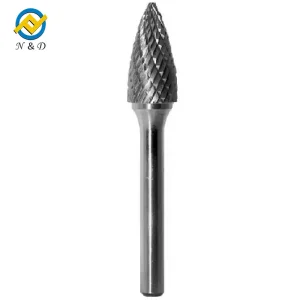
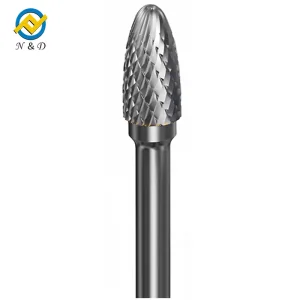
Precision engineered tree shape (Type G) rotary burr designed for casting cleaning, weld preparation, and industrial finishing tasks. Excellent heat and wear resistance.
Request Quote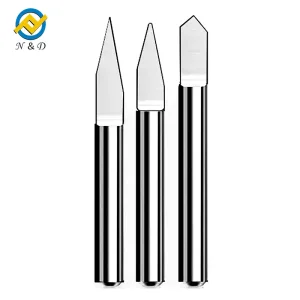
Ultra-micro grain solid carbide engraving bit designed for high-resolution CNC carving in complex non-ferrous metals and polymers.
Get Pricelist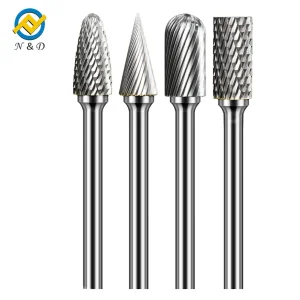
High-precision double cut rotary burrs optimized for structural machining and high-efficiency material removal across aerospace alloys.
Request Price
Premium Type F tree shape ball-nosed rotary burr. Features extreme hardness and durability for milling complex curved and contoured profiles.
Request Factory Quote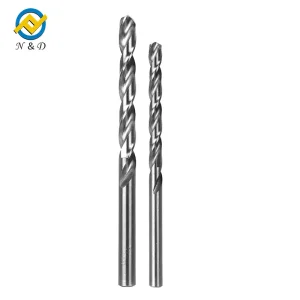
Advanced solid carbide twist drill designed for high feed rates and deep hole drilling applications in tough industrial metals.
Get Quote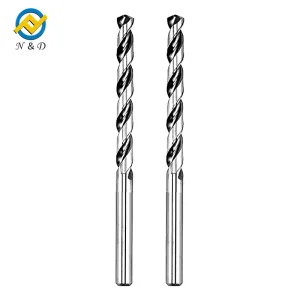
Alloying high-speed steel with premium cobalt for excellent edge toughness, stability, and longevity in heavy stainless steel drilling.
Request Price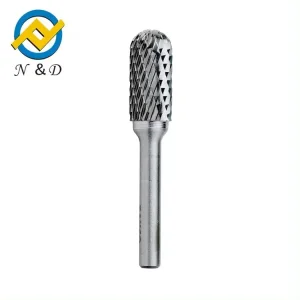
Designed for complex industrial machining profiles. Features premium grade tungsten carbide matrix for continuous precision milling.
Get Pricelist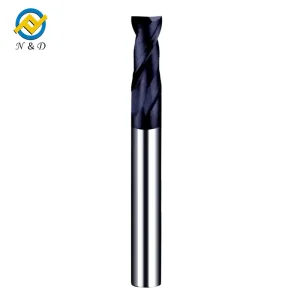
Premium double flute tungsten carbide end mill optimized for non-ferrous slotting, profiling, and high-speed CNC milling operations.
Request OEM QuoteIn the highly precise theater of modern sub-micron manufacturing, the performance of rotary cutting tools determines the ultimate ceiling of engineering innovation. Among these, the Diamond End Mill Cutter stands as the absolute zenith of abrasive wear resistance, geometric retention, and cutting-edge sharpness. As global industries transition towards stronger, lighter, and more complex material matrices—such as carbon fiber reinforced polymers (CFRP), high-silicon aluminum alloys, engineering ceramics, and ultra-fine structural graphites—conventional carbide tooling quickly reaches its thermodynamic limits. This whitepaper serves as an analytical framework for procurement officers, lead tooling engineers, and manufacturing executives looking to understand the global industrial landscape of diamond tools, analyze factory efficiencies, and obtain precise quotes to optimize their production workflows.
"The implementation of specialized diamond end mills doesn't simply extend tool life by 20 to 100 times compared to untreated solid tungsten carbide; it fundamentally reshapes the economics of the entire manufacturing cycle by eliminating tool-change downtime and maintaining unprecedented dimensional tolerances."
The global demand for high-performance superhard cutting tools is growing rapidly, driven by major advancements in aerospace engineering, electric vehicle (EV) automotive components, 5G telecommunications infrastructure, and high-frequency semiconductor manufacturing. Globally, the diamond tooling market is divided into three key technologies, each tailored to specific engineering needs:
As aerospace manufacturers worldwide look to minimize weight while maximizing strength, CFRP is replacing metal alloys at a rapid pace. Standard tools struggle with these materials, causing severe delamination, fiber breakout, and rapid thermal tool wear. Diamond end mill cutters, designed with highly engineered rake angles and high thermal conductivity, easily slice through abrasive fibers, ensuring perfectly clean finishes and long-term dimensional accuracy.
In the global procurement landscape, securing high-quality, high-volume diamond tooling requires balancing technical performance with cost efficiency. Tooling manufacturers in China—particularly those based in highly specialized regional clusters like Guanghan, Sichuan Province—have built a world-class manufacturing ecosystem that offers unmatched competitive advantages:
To maximize the return on your tooling investment, it is critical to align the design of your custom diamond end mill with the specific requirements of your machining applications. Below are the key industrial scenarios where diamond tools deliver unmatched performance:
Modern commercial aircraft rely heavily on structural composite materials. The high abrasiveness of carbon fibers causes rapid abrasive wear on standard tools, which often leads to severe material delamination and out-of-tolerance parts. Custom CVD diamond-coated end mills, featuring specialized compression geometries (combining left-hand and right-hand helices), push the top and bottom composite fibers inward toward the center of the sheet. This design eliminates delamination and produces perfectly clean edges in a single pass.
The transition toward electric vehicles has driven rapid demand for lightweight automotive parts made from high-silicon aluminum alloys (such as A390). The silicon particles in these alloys act like small, extremely abrasive stones that can quickly wear down conventional tungsten carbide edges. PCD-tipped end mills and thick-film CVD diamond cutters offer the high hardness and thermal conductivity needed to resist silicon abrasion, enabling fast cutting speeds and consistent dimensional accuracy across millions of cycles.
In the electrical discharge machining (EDM) industry, producing high-precision, intricate graphite electrodes is critical. Graphite is highly abrasive and generates fine dust that can quickly degrade standard tools. Custom CVD diamond end mills prevent edge erosion, allowing manufacturers to machine fine-pitched ribs, sharp corners, and deep cavities with excellent contour accuracy and zero structural defects.
The consumer electronics industry requires clean, high-precision micro-machining of glass, ceramics, sapphire, and copper alloys for modern mobile devices and micro-semiconductor packages. Multi-flute micro diamond end mills with small diameters (down to 0.1 mm) provide the exact edge radius and ultra-low surface roughness needed to produce defect-free, mirror-finish surfaces.
For international buyers, sourcing custom diamond tooling is not just a transactional purchase—it is a strategic partnership. Technical procurement managers must look beyond unit price and focus on comprehensive performance metrics:

Precision mixing of ultra-fine tungsten carbide, structural cobalt, and alloy particles in a controlled liquid medium.

Advanced thermal spray drying systems remove processing agents to produce optimized, highly uniform raw powder.

Compacting the raw powder under extreme, multi-directional hydraulic pressure to form dense tool blanks.

High-vacuum HIP (Hot Isostatic Pressing) sintering at over 1400°C ensures maximum physical density and structural integrity.

High-precision grinding of the tool flutes, relief angles, and cutting edges using advanced 5-axis CNC grinding machines.

Rigorous quality control using advanced optical and ultrasonic testing to verify surface quality and critical dimensions.

Founded in 2004, our company is a leading manufacturer of tungsten carbide products, specializing in the production of high-quality carbide materials and custom cutting tools. Headquartered in Guanghan, Sichuan Province, China, we have become an industry leader, serving a wide range of industries including aerospace, automotive, mining, construction, oil and gas, and precision electronics manufacturing.
Our commitment to excellence and innovation allows us to expand our business and meet the needs of our customers around the world. As a company with 120+ dedicated employees, we pride ourselves on providing quality products that meet the diverse needs of our customers. Our team consists of experienced professionals who are well versed in the intricacies of tungsten carbide and diamond manufacturing, ensuring our products meet the highest standards of precision and durability. Through continued investment in research and development, we strive to be at the forefront of technological advancement, allowing us to provide our customers with cutting-edge tooling solutions.
We provide comprehensive OEM and ODM services, tailoring custom tool geometries, flute styles, coatings, and shank designs to meet your specific manufacturing needs and expand your market reach.
Our tools combine premium sub-micron tungsten carbide substrates with advanced, high-adhesion diamond coatings to deliver excellent wear resistance and long-lasting edge sharpess.
Our tools support aggressive feed rates and higher cutting speeds, minimizing cycle times and reducing tooling changes to deliver clean, burr-free surface finishes in any material.
From custom tooling design to on-site technical support and process optimization, our engineers work closely with you to solve your toughest machining challenges and maximize throughput.
Customized oval shape (Type E) rotary burrs. Offers excellent material removal rates and superior control in restricted-access profiles.
Request Price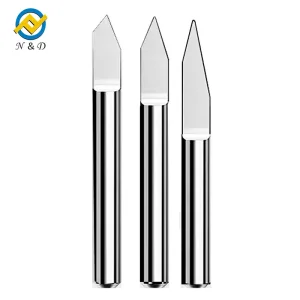
Engineered for intricate 3D engraving, mold manufacturing, and precision micro-machining with outstanding edge retention.
Request Quote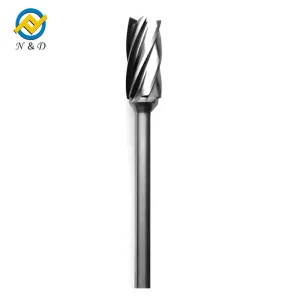
Wide-flute design optimized to prevent loading and chip clogging when machining aluminum, brass, and soft non-ferrous alloys.
Get Pricelist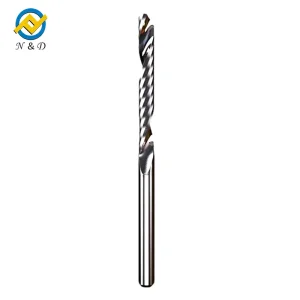
Single-flute spiral geometry designed for high-speed routing, clean chip evacuation, and outstanding surface finishes in plastics and acrylics.
Request Price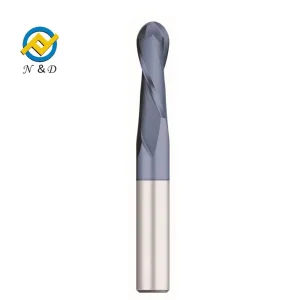
High-precision ball nose end mill designed for complex multi-axis contouring and smooth surface profiling in demanding tool steel applications.
Get Pricelist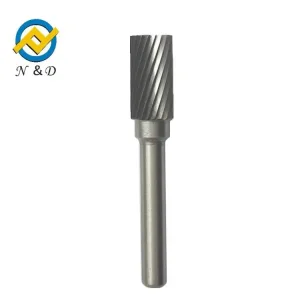
High-density solid carbide Type A cylindrical burr designed for heavy-duty stock removal, deburring, and surface finishing.
Request Price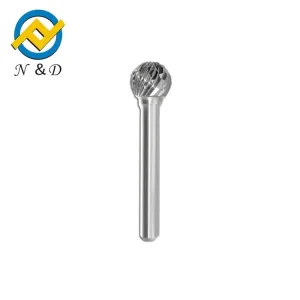
Precision ground spherical/ball shape rotary burrs for pocket machining, contouring, and internal circular deburring.
Request Factory Price
Premium double flute tungsten carbide end mill optimized for non-ferrous slotting, profiling, and high-speed CNC milling operations.
Request OEM Quote N&D Carbide