Explore our foundational engineering solutions crafted from high-density, structural submicron tungsten carbide blanks.
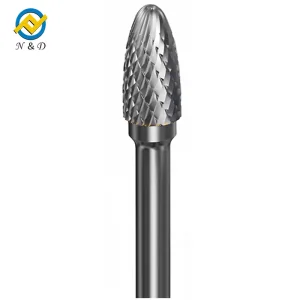
Customized size manufacturers and factory outlet. Built for high-efficiency structural contours and surface smoothing.
View Details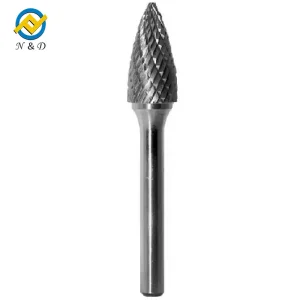
High-quality tree shape F-series grinding heads designed to execute smooth, curved internal profile machining easily.
View Details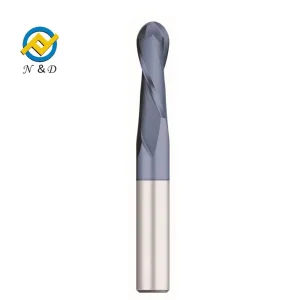
Extreme precision manufacturing. Perfectly circular profiles engineered for 3D modeling and complex profile finishing.
View Details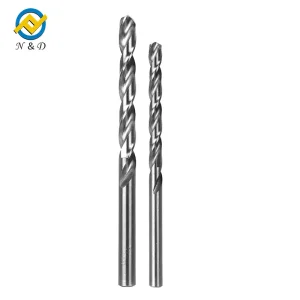
The ultimate high-rigidity drilling setup featuring superior chip extraction design for deep hole stability.
View Details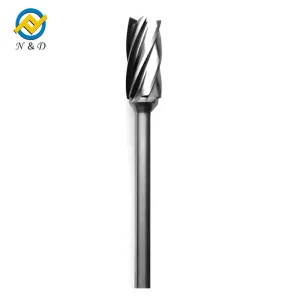
Optimized flute geometry configured with wide spaces to completely avoid chip build-up on soft non-ferrous alloys.
View Details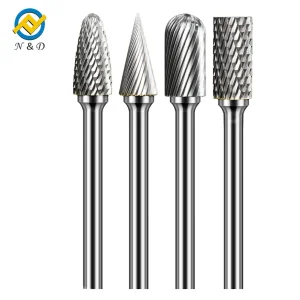
High-quality grinding tools engineered for heavy deburring, welding-seam clearing, and metallurgical contour adjustments.
View Details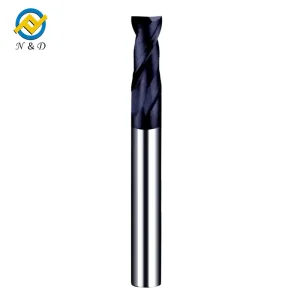
Premium grade 2-flute structural slotting cutter with massive flute space designed for aluminum slotting operations.
View Details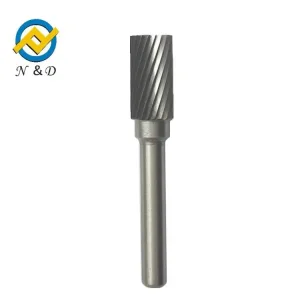
Standard and specialized cylindrical rotary file systems tailored for high-speed material surface profiling and dressing.
View DetailsIn the globalized arena of high-speed machining (HSM) and precision manufacturing, the Carbide Corner Radius End Mill has surfaced as a primary tooling requirement. Engineered with a specialized radiused edge, these tools strike a critical balance between structural rigidity and machining adaptability. Traditional sharp-corner square end mills frequently suffer from stress concentration at their outermost edges, leading to premature micro-chipping and catastrophic tool failure under heavy structural loads. By introducing a precisely ground radius corner, the mechanical stress profile is effectively redirected across a broader geometric volume, enabling significantly improved tool life and enhanced cutting speeds.
Global procurement channels for these critical assets require high consistency, strict metallurgical compliance, and reliable cost structures. For operations ranging from commercial aerospace machining in North America to precision tool and die manufacturing across Central Europe, identifying the ideal factory partner is a vital strategic objective. Factories capable of tailoring custom geometries, helix angles, and advanced nano-layer coatings provide operations with an immediate competitive advantage. This translates directly to reduced setup times, lower cycle durations, and less downtime across CNC machining centers.
Procuring these high-precision cutters at scale demands a deep understanding of raw materials. The base cost of solid carbide tools is closely tied to the global pricing index of raw tungsten ore (ammonium paratungstate) and cobalt powder. Premium Chinese producers, particularly those located in strategic raw material hubs, leverage localized access to secure superior materials at competitive price points.
However, smart procurement managers know that upfront purchasing cost is only one element of overall value. The true cost metric is Cost Per Part (CPP). A premium custom carbide corner radius end mill, despite carrying a higher initial price, can often process 3 to 4 times the volume of standard tools, yielding a much lower total cost per part over long production runs.
At the core of every high-performance corner radius end mill is its substrate structure. The performance of these tools relies heavily on the quality and grain size of the underlying tungsten carbide material. Solid carbide itself is a composite material, made of hard tungsten carbide (WC) grains bound within a tough cobalt (Co) matrix. The size of these grains is a primary indicator of performance:
| Substrate Grade Class | Avg. Grain Diameter (µm) | Cobalt Content (wt%) | Hardness (HRA) | TRS (Transverse Rupture Strength, MPa) | Ideal Workpiece Material Application |
|---|---|---|---|---|---|
| Medium-Coarse Grain | 1.5 – 2.5 | 10% – 12% | 88.5 – 89.5 | 2700 – 3000 | Heavy abrasive irons, composite casting, low-alloy steels |
| Fine Grain (Standard) | 0.8 – 1.0 | 8% – 10% | 91.0 – 92.2 | 3200 – 3500 | Medium carbon carbon steels, general stainless steels |
| Submicron Grain | 0.5 – 0.7 | 10% – 12% | 92.5 – 93.8 | 3800 – 4200 | Titanium, Inconel, hardened alloys, high-nickel aerospace components |
| Ultra-Fine / Nanograin | < 0.4 | 9% – 12% | > 94.0 | > 4400 | Hardened steels (up to 65 HRC), micro-milling, die-mold details |
Selecting a smaller grain size yields dual benefits: it increases both hardness (wear resistance) and transverse rupture strength (toughness). This seems counterintuitive in classic metallurgy, where harder materials are typically more brittle. However, by reducing grain size down to submicron levels, the carbide particles are packed much tighter together. This leaves fewer open pockets of soft cobalt matrix, creating a highly uniform, fracture-resistant structure.
Even the highest-grade raw substrate will wear quickly when subjected to temperatures exceeding 800°C, which are common in high-speed milling. To protect the base material, advanced surface coatings are applied using Physical Vapor Deposition (PVD):
High-precision machining is built on precise geometric design. When ordering custom carbide corner radius end mills, engineers must carefully balance multiple geometric factors to optimize cutting performance:
The helix angle determines the rate of chip removal and the direction of cutting forces. Standard 30° to 35° helix angles are well-suited for general steel machining, providing a good balance between cutting edge strength and smooth chip evacuation. For soft, high-adhesive alloys like aircraft-grade aluminum, higher helix angles (40° to 45°) are preferred. These angles generate a positive lifting action, extracting soft chips quickly to prevent clogging.
For highly challenging materials like Titanium (Ti-6Al-4V) and Inconel, variable helix designs (e.g., 38°/41° alternating) are the industry standard. By varying the helix angle between flutes, the regular frequency of cutting impacts is broken up. This prevents harmonic resonance, virtually eliminating tool chatter and allowing for much deeper radial and axial cuts.
The core diameter is the inner support structure of the end mill. A larger core increases tool rigidity, making it much more resistant to deflection and breakage under high feed rates. However, this also reduces the available flute space, which can lead to chip packing.
To balance these needs, high-end custom tools utilize a tapered core design. The core is thinner near the tip to maximize chip space, and gradually thickens toward the shank to provide maximum structural support.
How raw metallurgical elements are transformed into premium, high-durability industrial cutting tools.


Modern industrial machining operations demand tooling solutions tailored to their specific applications. General-purpose end mills often fail to deliver the performance required for modern high-speed milling. Our custom corner radius end mills are engineered to excel in the most challenging industrial environments:
Aerospace manufacturing requires machining highly critical, expensive components like turbine blades, landing gear structures, and wing spars from tough materials like Titanium (Ti-6Al-4V) and Inconel 718. These alloys are notorious for their low thermal conductivity and high work-hardening rates, which subject tool cutting edges to extreme heat and friction.
To meet these challenges, our aerospace-grade end mills feature a submicron carbide substrate paired with a high-aluminum AlTiN or AlTiSiN PVD coating. This coating forms a highly protective, heat-resistant aluminum-oxide layer at temperatures up to 900°C.
Additionally, a customized 4-flute design with alternating 38°/41° variable helix geometry is used to break up harmonic vibration. This stabilizes the tool, permitting deeper radial cuts while maintaining the tight dimensional tolerances required for structural flight components.
High-volume automotive production lines require tooling that delivers exceptional tool life and consistency. Machining engine block faces, crankshaft housings, and complex suspension knuckles involves working with highly abrasive materials like cast iron and forged steel alloys.
For these applications, we utilize fine-grain substrates with a high 12% cobalt content, which provides the high impact strength needed to withstand interrupted cuts and varying structural densities. The corner radius is ground to a precise spherical fillet, minimizing edge chipping during high-feed milling. This allows automotive manufacturers to run high-efficiency feed schedules, directly lowering cycle times and reducing tool changes.
The tool and die industry involves machining complex, curved 3D geometries out of highly abrasive tool steels (such as H13, D2, and P20) hardened to 50–65 HRC. Here, our custom corner radius end mills are essential for both heavy roughing and smooth 3D finishing.
The precise corner radius allows the tool to execute deep pocket roughing while leaving a highly uniform, predictable stock allowance for subsequent finishing operations. By using specialized nano-structured coatings, these tools can execute high-speed finishing runs for hours at a time, producing the highly polished surfaces and tight tolerances required for precision injection molds.
As machine tool capabilities continue to advance, with spindle speeds exceeding 40,000 RPM and rigid multi-axis setups becoming common, cutting tool technology must evolve to keep pace. The next generation of custom carbide corner radius end mills is moving toward advanced, ultra-fine microstructure materials and intelligent geometric designs.
In our state-of-the-art research facility, we are actively developing and testing several next-generation tooling advancements:
For industrial procurement departments, managing tool costs while ensuring a reliable supply chain is a critical objective. Understanding the key cost drivers of high-quality corner radius end mills is essential for effective budgeting and strategic purchasing:

Founded in 2004, our company is a leading manufacturer of tungsten carbide products, specializing in the production of high-quality carbide materials. Headquartered in Guanghan, Sichuan Province, China, we have become an industry leader, serving a wide range of industries including mining, construction, oil and gas, and manufacturing.
Our commitment to excellence and innovation allows us to expand our business and meet the needs of our customers around the world. As a company with 120+ dedicated employees, we pride ourselves on providing quality products that meet the diverse needs of our customers. Our team consists of experienced professionals who are well versed in the intricacies of tungsten carbide manufacturing, ensuring our products meet the highest standards of precision and durability.
Through continued investment in research and development, we strive to be at the forefront of technological advancement, allowing us to provide our customers with cutting-edge solutions.
Get professional advice and solutions from our senior application engineers.
Explore our highly specialized CNC cutter, engraving, and high-performance drilling systems.
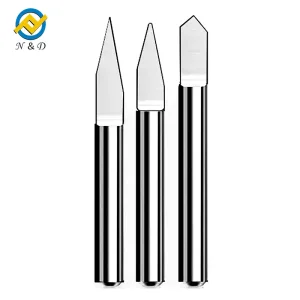
High-precision V-carve engraving bits featuring razor-sharp tips, optimized for intricate engraving on various substrates.
View Details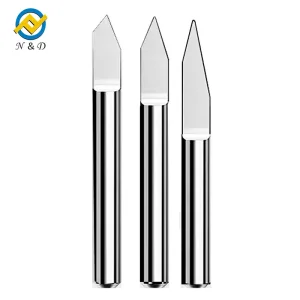
Premium engraving system engineered for clean, burr-free details on wood, plastics, and soft metal workpieces.
View Details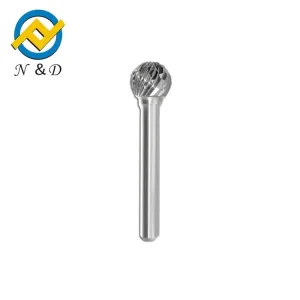
Precision-engineered ball-shape rotary burrs designed to execute smooth, curved internal profile machining with ease.
View Details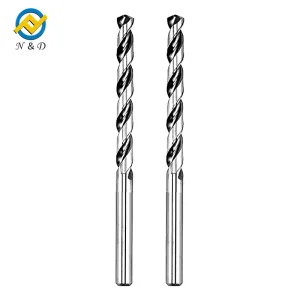
High-grade cobalt steel drills engineered to maintain high hardness and thermal stability in tough alloys.
View Details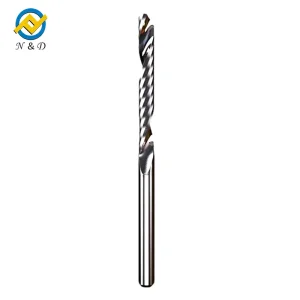
Ultra-smooth single flute design optimized for high-speed routing in plastics, composites, and aluminum.
View Details
Type G pointed tree shape burrs designed for deburring and shaping in tight, hard-to-reach internal corners.
View Details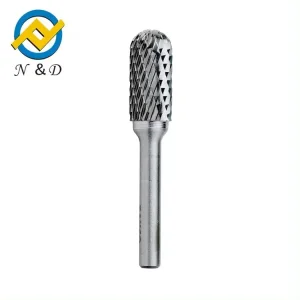
High-quality cylindrical rotary burrs featuring spherical ball-nosed tips for versatile multi-axis contour milling.
View Details
Customized size manufacturers and factory outlet. Built for high-efficiency structural contours and surface smoothing.
View Details N&D Carbide